As the year winds down it’s nice to take a quiet moment and remind myself just how busy 2014 was! A benefit of blogging is how easy it makes this kind of reflection.
Teaching
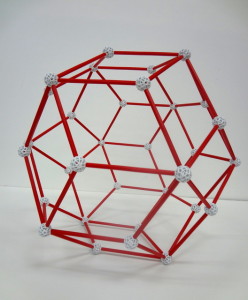 It’s a sign of a great year when lots of new ideas permeate your classroom.
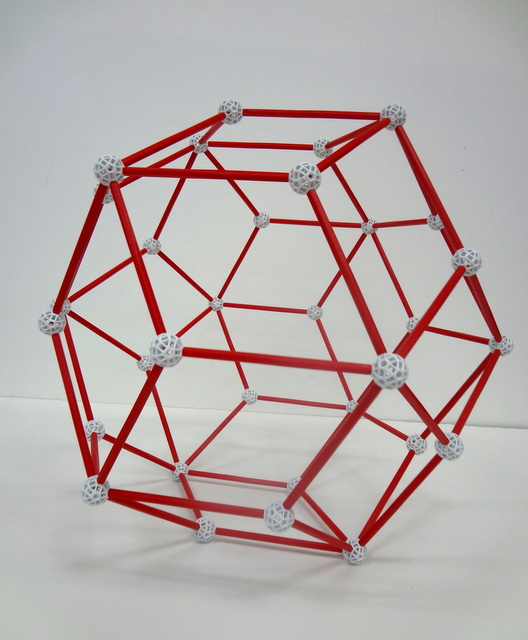
A terrific workshop with George Hart offered by Math for America introduced me to Zometool as a mathematical teaching and learning tool. In March we had fun with a Pi Day activity I designed, and ever since I’ve been finding ways to make Zometool a part of what we do in all my classes. I’ve been thinking about symmetry a lot this year, which is a natural place for students to build and explore with Zometool.
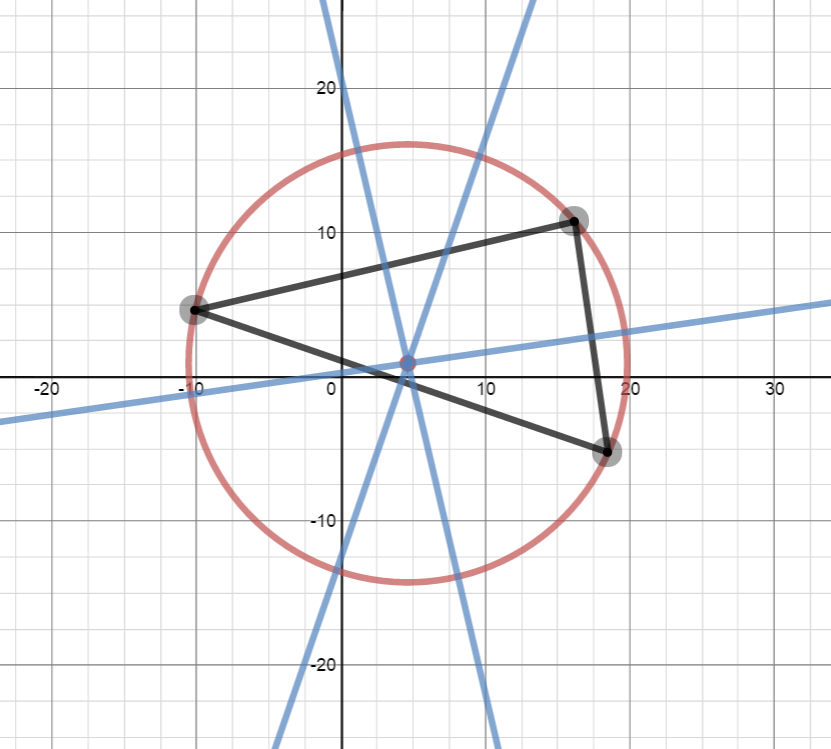
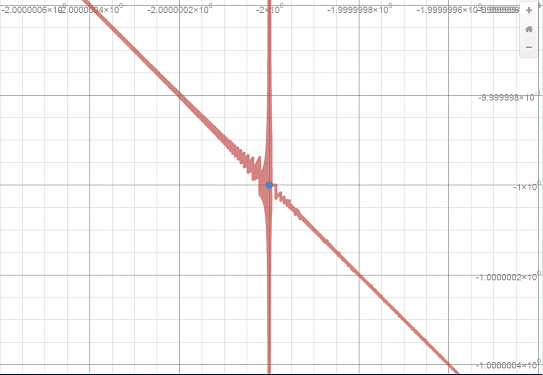
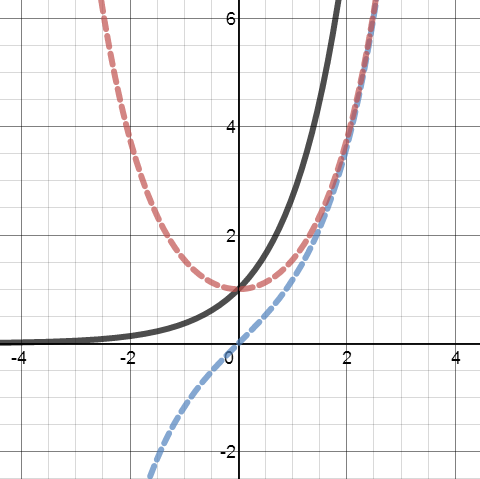
I’ve also been working a lot with mathematical and computing technologies in class this year. We’ve been using Desmos to explore concepts, build mathematical demonstrations, and learn mathematics. And we’ve been playing around in Scratch, building simulations and doing some elementary numerical approximations. I’ve also started experimenting with 3D printing as a mathematical teaching and learning tool, and the preliminary results have been exciting. I’m hoping to have more opportunities to work with this in the near future.
Speaking
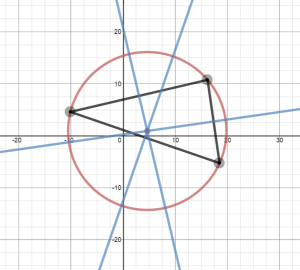 I’ve been very busy speaking and presenting this year. I ran a variety of workshops in 2014 on topics such as 3D coordinate geometry, matrices, Desmos, and Twitter.
In November I presented “When Technology Fails!” at the 3rd annual Master Teachers on Teaching event at Math for America. There are some great photos from the event here, and my talk even inspired a colleague to write a blog post!. And in April I delivered the keynote address at the New York State Mathematics Association of Two-Year Colleges annual conference, giving my talk “Two Views on the Future of Math Education”.
Writing
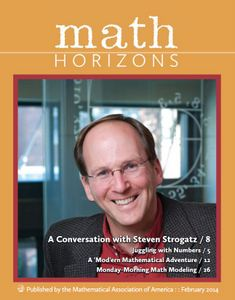 One of the professional highlights of my year was interviewing mathematician Steven Strogatz for Math Horizons. Our wide-ranging conversation about mathematics, writing, and teaching was so much fun it ended up being published in three parts, all of which are freely available online!
I proudly continued my work with the New York Times Learning Network this year, where I wrote math lessons about ebola, fair division, March Madness, infographics, and the Olympics.
I also continued my work profiling and analyzing New York State Math Regents exams, including this piece about the curious difference in scoring between the Common Core and non-Common Core Algebra exams. And on the lighter side, I contributed to this Mashable piece “In Defense of Math“.
So, 2014 was a very busy, but productive, year! Here’s hoping 2015 is just as good, if not a little bit quieter.
Related Posts


 , so an increase in radius seems to have a squared effect on the volume, while the effect of an increase in height is only linear.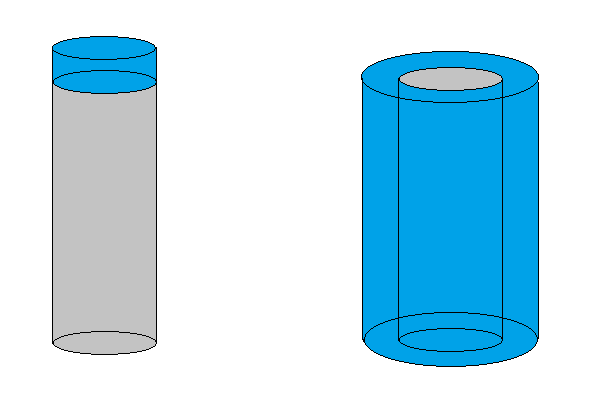

 and
and