
Sanjay Mahajan’s Street Fighting Mathematics is a short, dense, and engaging book that explores some mathematical problem-solving techniques not typically taught in math class.
These techniques, favored by engineers and scientists who are usually more interested in the answer to a question than in the mathematical theory that gets them there, can turn seemingly intractable problems into simple ones, often just by a change in perspective.
For example, the book offers a short treatment of Feynman’s differentiating-under-the-integral approach, one of the more famous “back of the napkin” techniques. Mahajan even “guesses” the definite integral that yields the area under the bell curve, using dimensional analysis the likes of which I’ve never seen.
A “Street Fighting Mathematics” course is offered through MIT’s OpenCourseWare, which includes lectures, notes and problem sets. In addition, Mahajan has made the book available for free in PDF format.
I was making lemonade the other day, and this happened.

which of course, equals, the following:

There you have it: the sum of the first three triangle numbers is the third tetrahedral number! Proof by lemons.
 This is a nice takedown of some spurious economic analysis, courtesy of Freakonomics:
http://www.freakonomics.com/2011/03/30/how-to-spot-advocacy-science-john-taylor-edition/
Looking at the graph at the right, it’s hard not notice the negative correlation between the two given variables, and the economist in question uses that correlation to bolster his policy argument.
The graph looks a lot different, however, when you look at all the available data, not just the data between today and the arbitrarily chosen cut-off of 1990. But that chart doesn’t support the argument as decisively.

As the author suggests, “Be wary of economists wielding short samples.”
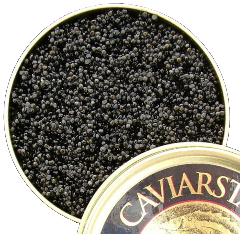 Through Math for America, I am part of an on-going collaboration with the New York Times Learning Network. My latest contribution, a Test Yourself quiz-question, can be found here:
https://learning.blogs.nytimes.com/2012/01/11/test-yourself-math-jan-11-2012/
This problem is related to worldwide caviar production. What is the total worth of all the caviar produced in the world in one year?