7 Ways to Explore the Math of the Coronavirus Using the New York Times

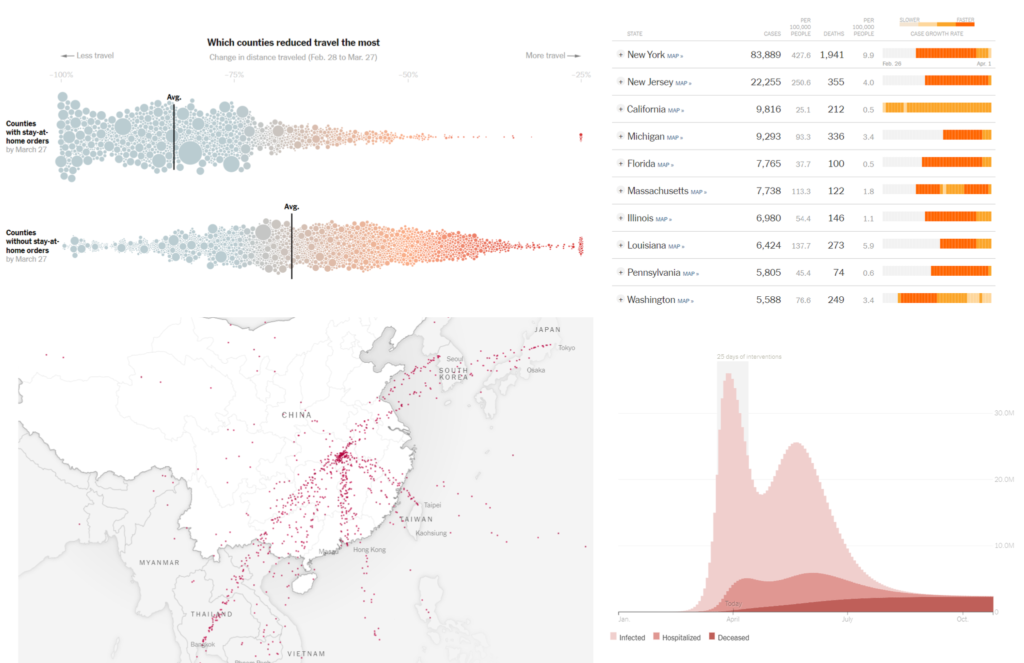
My latest piece for the New York Times Learning Network is “7 Ways to Explore the Math of the Coronavirus Using the New York Times”, a collection of ideas for using NYT articles, infographics, and interactives to explore the mathematics underlying the current coronavirus epidemic.

The opportunities range from statistical literacy to network theory. Here’s an example of some data analysis you can engage in using a wonderful NYT interactive:

By using sliders to change, for example, the level of intervention (e.g., moderate or aggressive) or the length of intervention (e.g., 14 days or 60 days), students can see how outcomes change. And, by playing with the model, they will be able to answer questions like: “What is the impact of shortening our social distancing period?” or “What happens when we delay the start of our interventions?”

The full article is freely available on the New York Times Learning Network.

Remote Learning — Week 2

May you live in interesting times, so the blessing / curse goes. These are certainly interesting times to be a teacher.

Mandatory remote learning has given the entire teaching community a common challenge to face, one that most teachers have no experience with. Effective teachers are problem solvers by nature — with hundreds of little issues to deal with each day, we must be — so it’s no surprise that teachers are largely rising to the occasion. But in observing teachers navigate this challenge, I’ve noticed very different approaches.

I mentioned this the other day.

A lot of teachers are looking to recreate the experience of their classroom, with mandatory Zoom meetings, roll call, video-proctored exams, and other synchronous activities. My approach has been to recreate the workflow of our classroom: presentation of key ideas followed by low-stakes formative assessment followed by a work-feedback-revision cycle, all happening asynchronously. With this basic framework in place I’ve only recently begun to consider how live sessions can fit in. I see their value, if for no other reason than to connect with each other, but so far students have expressed mixed feedback about their importance.

As I said in my tweet, this is all observation, not judgment. Like everyone else I’m just trying to figure out what works for me and my students. And things will change, as they so quickly do these days. But I hope we take advantage of these new challenges and new technologies to rethink what we do, rather than simply figure out ways to replicate what we’ve always done.

Related Posts

Remote Learning — Week 1

The COVID-19 pandemic closed New York City schools down two weeks ago. After a week of preparation, we officially transitioned to remote learning on March 23rd. Having just completed our first week, I asked for feedback from my students. I wasn’t sure what to expect.

In the thread that follows the above tweet, I share some things students say are working for them. One of those is flexible scheduling: All of the required work is asynchronous, which allows students to figure out for themselves the best time to get work done. A recurring sentiment in the feedback is the value of learning at my own pace:

“I could actually take my time to comprehend the lesson plan on my own pace.”

“That I could do work mostly when I felt like it, instead of being stuck to doing it between 8:45 and 10:15.”

“I was able to finish all my work in my own time without having to catch up to anyone in class”

“There are times I get stuck on a math problem and I would just put it aside and have it at the back of my mind while I do something else and come back to it at a later time.”

A lot will have changed by the time the coronavirus has passed. As we start our journey into remote learning, I wonder how my teaching will change. It seems I’ll have plenty to think about.

Related Posts

NPR — Teaching Math Using the Coronavirus

I make a brief appearance in this NPR story about teaching using the coronavirus. In “Teacher Uses Coronavirus for Math Lessons”, reporter Emily Files profiles a teacher in Wisconsin who is using the coronavirus epidemic to get his middle school math students thinking about data and rates of change. Files interviewed me a about the lesson I wrote for the New York Times Learning Network on “Dangerous Numbers” (available here).

Follow

Get every new post delivered to your Inbox

Join other followers: