One of the items on my to-do list was build something. To that end, I spent the afternoon turning a bunch of leftover lumber into a small table.
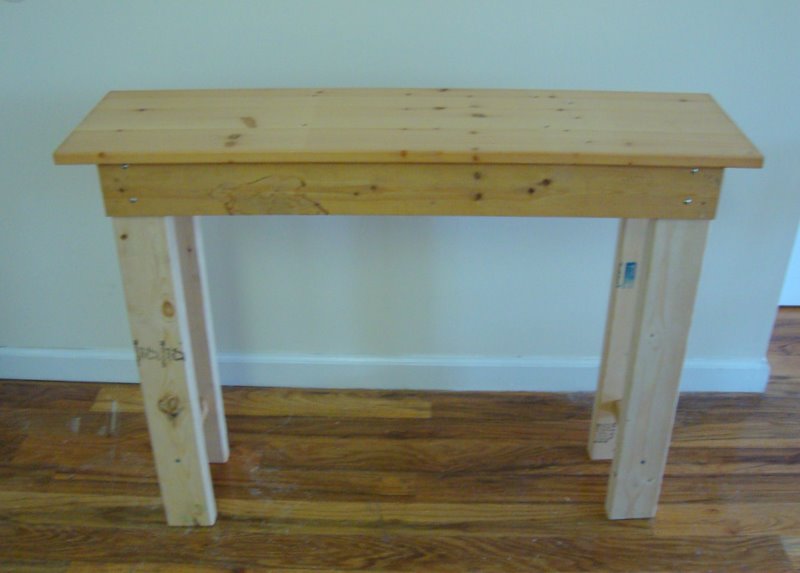 I’ve always admired those who can build elegant and functional things, but I came away from my project with an even greater appreciation for carpenters, woodworkers, builders, and the like. The measuring: how far are those legs spaced apart? The calculating: when all these pieces get put together, how tall is this thing supposed to be? The engineering: why are things rolling off my table? It’s a set of serious cerebral challenges on top of the obvious physical demands.
One theme that stood out as I slowly assembled my table was that of error propagation. A tiny error at an early stage (a millimeter or two of slant on a “flat” cut on a leg) can produce a sizable error in the end (things quickly rolling off your table).
It put me in mind of the classic differential problems in elementary calculus. For example, suppose you are measuring the diameter of sphere with a margin of error of +/- .1 mm: how much error might this generate in calculating the volume of the sphere? The surface area?
An even more complex problem is understanding how different errors interact with each other, which is something I experience frequently while putting this table together!