Is Mathematics Unnatural?

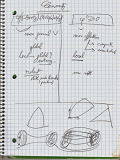
villani notebookThis October I had the great pleasure of meeting Fields medalist Cedric Villani. Professor Villani gave an illuminating and accessible talk about his innovative work in the study of curvature, and afterwards spent some time hanging out and chatting with a few of the attendees.

Villani is a charismatic and engaging speaker, and he provided a lot of to think about in his talk. One remark that particularly struck me was

“Mathematics, in some sense, will always involve a little pain.” 

The idea resonated with me but I was curious what he meant, so I asked him about it. I was a bit surprised when he said that mathematics is unnatural, and unnatural things are always painful.

I pressed him a bit, as I didn’t quite understand. “What are the first things you learn in physics?” he asked. He was alluding to Newton’s Laws, and in particular the law of inertia: An object at rest tends to stay at rest, and an object in motion tends to stay in motion. Villani grabbed a fork from across the table, slammed it down in front of him, and gave it a push. The fork slid a short distance and stopped. “This is absurd!” he said. “It does not stay in motion!”

Physics, that is, the laws of physics, are abstractions of our experiences with the real world. Understanding that when you push something, it will stop, is natural for us; understanding the law of inertia is not. This law is an abstraction of our natural experiences, and as such, is unnatural. He went on to argue that mathematics, too, is a collection of abstractions from our experiences of the real world, and therefore is unnatural.

He made an analogy with speaking and reading:  speaking is natural for humans, we are hard-wired for it. But writing is not. It does not come naturally to us. As an abstraction of speaking, writing will always be difficult for humans to learn. It will always involve a little pain. Like mathematics.

Some world-class mathematics, a little philosophy, and a mathematical autograph! All in all, a pretty good evening.

MT^2 — MfA Master Teachers on Teaching

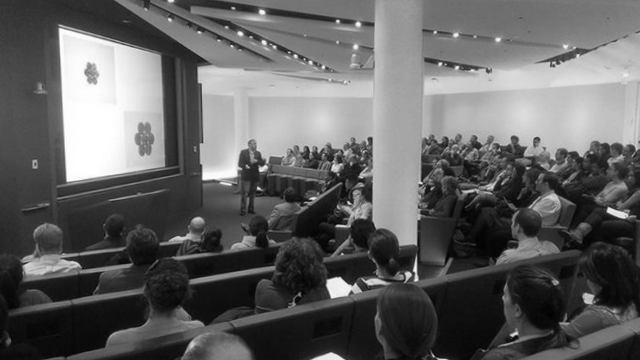
PIH at MT^2-001I was proud to be a part of Math for America’s second annual MT^2 event , Master Teachers on Teaching.

MT^2 invites MfA teachers from around New York City to propose short talks related to the conference theme.  This year’s theme was Change, and the seven teachers selected to present offered many different and interesting interpretations of that theme, including changing our practice, changing how we see our students, and changing the rules in mathematics.

At this year’s event, I offered a lighthearted but sincere take on my mathematical relationship with change.  At last year’s inaugural event, where the theme was Modeling, I talked about how standardized testing often works against our attempts to teach proper mathematics (the video of the talk can be seen here).

This event is typical of how Math for America celebrates and empowers teachers.  They created a space where teachers could share their ideas, grow their practice, and interact around mathematics, science, and teaching, and it was all teacher-led and teacher-driven.  Several hundred teachers were inspired by the work of their peers, challenged to think differently, and encouraged to continue to strive to be better teachers.  It’s great professional development, and it was a fun evening!

When Desmos Fails

I am huge fan of Desmos, the free online graphing calculator.  I use it almost every day in my classroom:  to sketch simple graphs, demonstrate mathematical relationships, and dynamically explore mathematical situations.  And like most worthy instructional technologies, it’s really a learning technology:  it’s easily accessible to students as well as teachers..

As far as technology goes, Desmos works very well.  But some of my favorite mathematical questions arise when technology does something we don’t expect.

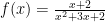
For example, here’s the graph of f(x)=\frac{x+2}{x^2+3x+2}.  This graph has a hole (a removable discontinuity) at the point (-2,-1), which I have colored blue.
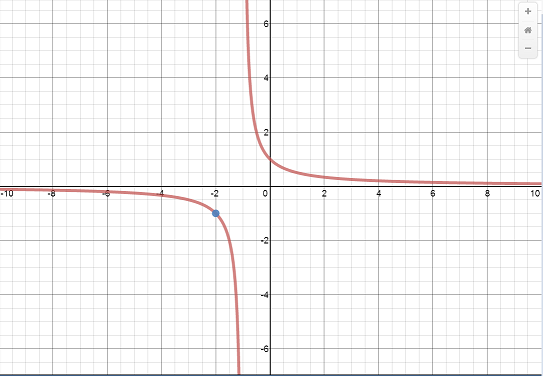
Desmos -- Zoomed Out

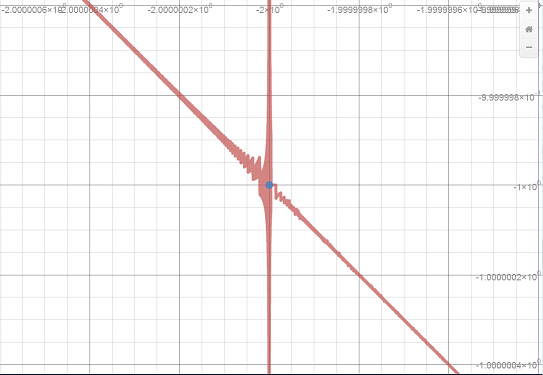
But look what happens when you zoom in around the hole:

Desmos -- Zoomed In

At a very small scale, some very curious behavior emerges!

Now, it’s not the function here that’s behaving strangely:  its behavior is well-understood.  It’s the mathematical technology that is behaving strangely, as it tries to represent the function.

Lots of interesting questions emerge from such anomalies, and these are great questions for students to explore.  In doing so, they’ll not only learn some mathematics and some computer science, but they’ll also develop a healthier relationship with technology, by learning to understand how it does what it does, and perhaps more importantly, what it doesn’t do.  I explore this theme in greater depth in my talk “When Technology Fails“.

You can find more of my work with Desmos here.

Related Posts


TIME 2000 Conference

TIME 2000I am excited to once again be participating in the TIME 2000 conference at Queens College.

This conference showcases the TIME 2000 program at Queen’s College, which supports undergraduate students in studying mathematics and math education.  I will be running a workshop on the geometry of folding and cutting.  James Tanton–mathematician, teacher, and creator of fantastic mathematical challenges–will be giving the keynote address.

The conference is Friday, November 22nd, and is open to high school students who are considering mathematics education as a possible career.

Nathan Selikoff on Art, Chaos, and Computation

DSC06837-001We recently hosted artist and computer programmer Nathan Selikoff at our school, and he spoke to our students about art, mathematics, and technology.

Nathan Selikoff is an award-wining artist and an organizer of the Bridges Math and Art conference.  In his talk, “Art, Chaos, and Computation”, Nathan provided an engaging overview of the history of computation in art while talking about his personal experiences conceiving and creating mathematical art.

The talk left quite an impression on our students, many of whom were not aware that mathematicians and computer scientists could also be artists.   Students left the talk interested in experimenting with their own mathematical creations, and they were excited to play with the programs the artist generously provided.

A few student quotes nicely summarize the impact of the talk:

It made me want to learn more about the codes and the mathematical equations that make up the paradoxes of the chaotic art pieces.

This really makes me wonder about the extent of art that can be created. I’m curious to find out what I’ll be able to program.

The talk inspired me to create my own art with math equations. 

Thanks to the artist for such a great visit!  You can find out more about Nathan Selikoff here.  And be sure to check out the Bridges Math and Art conference.

Follow

Get every new post delivered to your Inbox

Join other followers: