Inforgraphic Competition

visualization magazineVisualisation Magazine, which seems to specialize in Data Representation and Information Graphics, is holding a homemade, handmade Infographic Contest.

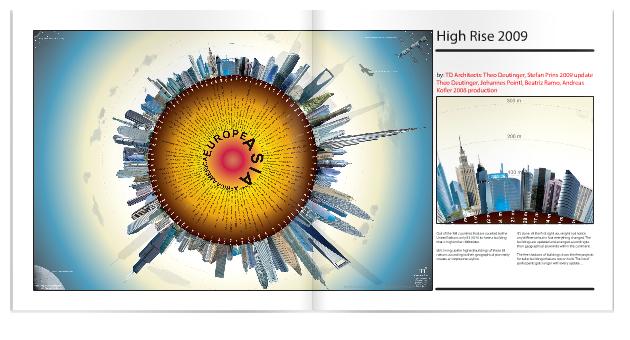
The contest is apparently open to anyone, and the publishers are emphasizing handmade techniques.  The winner will make the cover of the next volume of their magazine.  I leafed through their volume on Circles (screenshot above) and there were some good looking infographics in there.

There is a flickr group set up for submissions, which you can check out here:  http://www.flickr.com/groups/vismaghandmadecontest.

Edublog Award Nominees

EduBlog AwardsHere are my nominees for the 2010 Edublog Awards.  (The Edublog Awards Homepage)

Best individual blog:  James Stanton (http://www.jamestanton.com/)

Best teacher blog:  James Stanton (http://www.jamestanton.com/)

Best Individual Tweeter:  republicofmath (http://republicofmath.wordpress.com/)

Best resource sharing blog:  NYT Learning Network (http://learning.blogs.nytimes.com/)

Best group blog:  NYT Learning Network (http://learning.blogs.nytimes.com/)

Thanksgiving Calculations

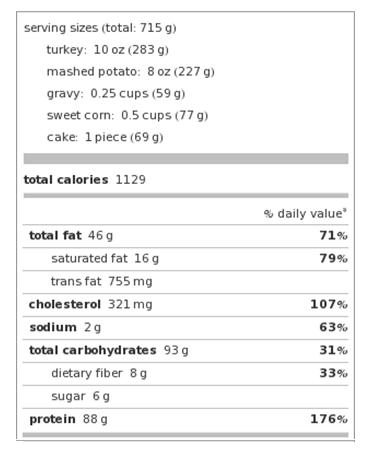
Thanks to WolframAlpha, you can easily compute a wealth of nutritional information based on your Thanksgiving intake!

WA Thanksgiving input

WA Thanksgiving Output

This hypothetical 1129-calorie dinner plate above is not intended to be an accurate representation of my typical Thanksgiving meal.  Indeed, this is not even an accurate representation of my first serving at a typical Thanksgiving dinner.  These hypothetical portions are meant to be used for educational purposes only.

Gumdrop Solids

gumdrop solidsThis is a nice little video demonstrating how to use gumdrops and toothpicks to create Platonic Solids.

http://www.youtube.com/v/5QgIJOy7T7Y

A Platonic Solid is basically the 3-dimensional version of a regular polygon.  A regular polygon is a 2-dimensional figure whose sides and angles are all congruent.  A Platonic Solid is a 3-dimensional figure whose faces are all congruent, and the faces are put together at every vertex in the same way.

The most common example is the cube:  it has six identical faces (squares), and each vertex is formed by putting three squares together at right angles to each other.

Quite remarkably, there are only five Platonic Solids:  the tetrahedron, the cube, the octahedron, the icosahedron, and the dodecahedron.  There are many other solids with interesting properties, but only five that satisfy the above conditions.

Our video-maker wasn’t ambitious enough to construct a dodecahedron.  Or maybe she just didn’t have enough gumdrops.

Follow

Get every new post delivered to your Inbox

Join other followers: