While on the beach one day, I found a triangular rock. So I started on some beach relief.
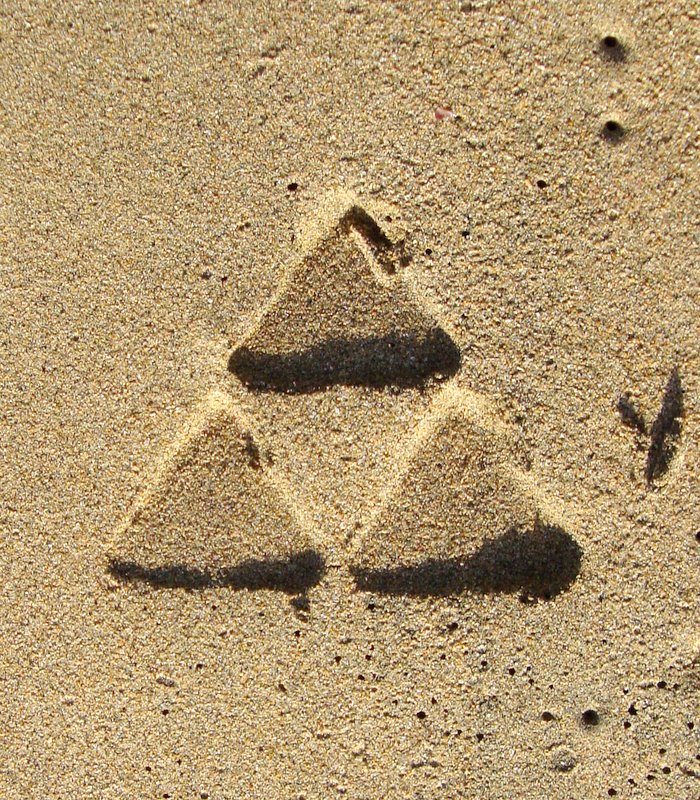
Then I iterated.

And I iterated again.

And I continued to iterate, until the whole beach was one big Sierpinski Triangle!
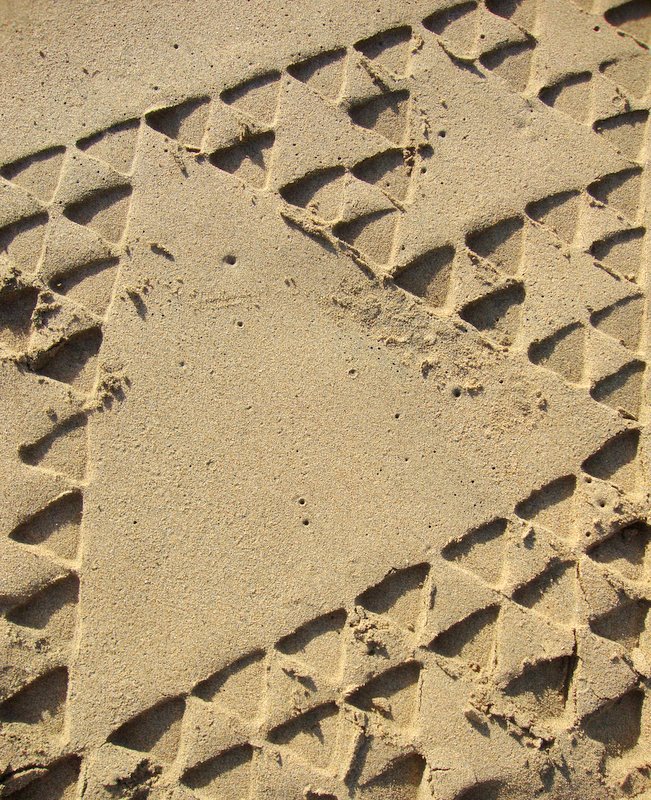
While on the beach one day, I found a triangular rock. So I started on some beach relief.
Then I iterated.
And I iterated again.
And I continued to iterate, until the whole beach was one big Sierpinski Triangle!
 This website provides running tallies on several world-wide statistics:
Data on Population, Energy, Economics, and Health are all constantly “updating”, brought you you by the Real Time Statistics Project.
In addition to the obvious questions one could ask, like “At what point will the world’s population grow to over 10 billion?” or “When will the earth run out of oil?”, there are interesting meta-questions like “Where do these models come from?” and “What assumptions are being made to calculate the amount of money spent on weight-loss programs?”.
Another nice resource to play around with!
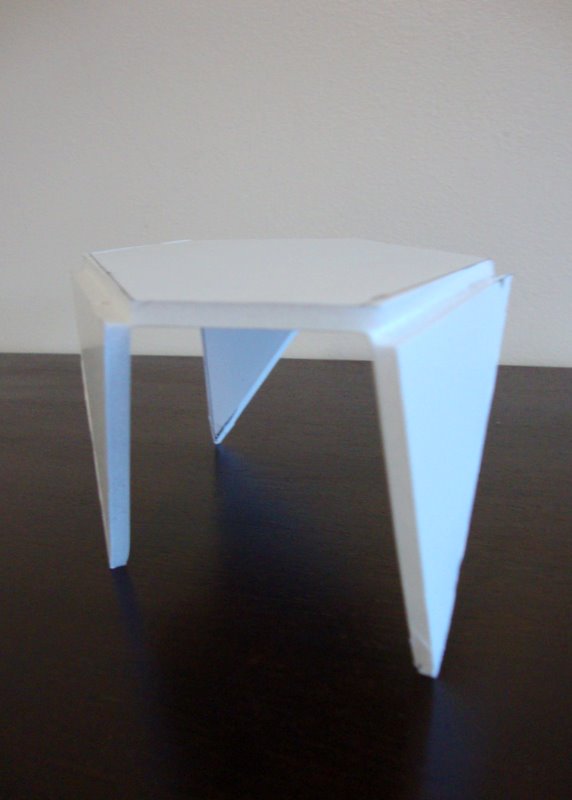 I was inspired to have some more fun with folding by a question from this year’s American Invitational Mathematics Examination (AIME) that turned triangles into tables and asked “How high can the table go?”. (You can find the question here).
Investigating the problem seemed like more fun than solving it, so I cut out a triangle from some foam board and scored lines near the vertices.
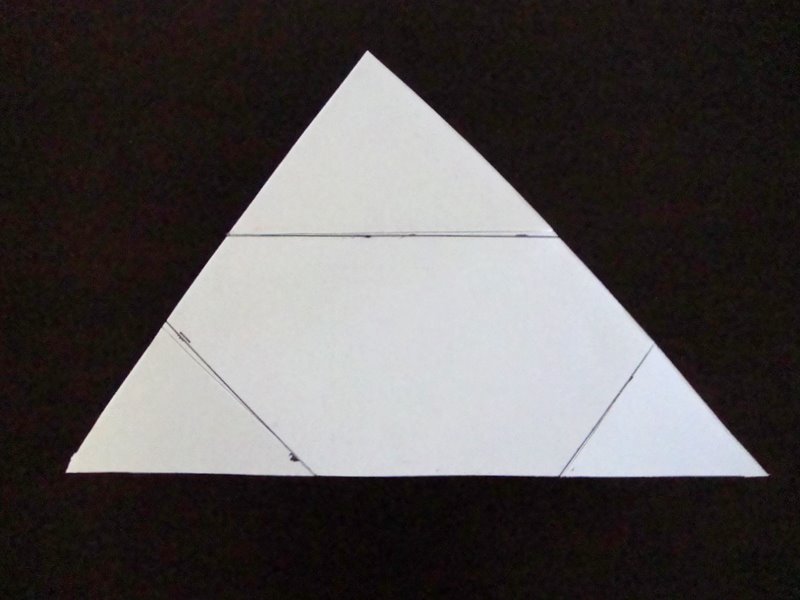
Then I folded the corners and made the following table with an irregular hexagonal top!
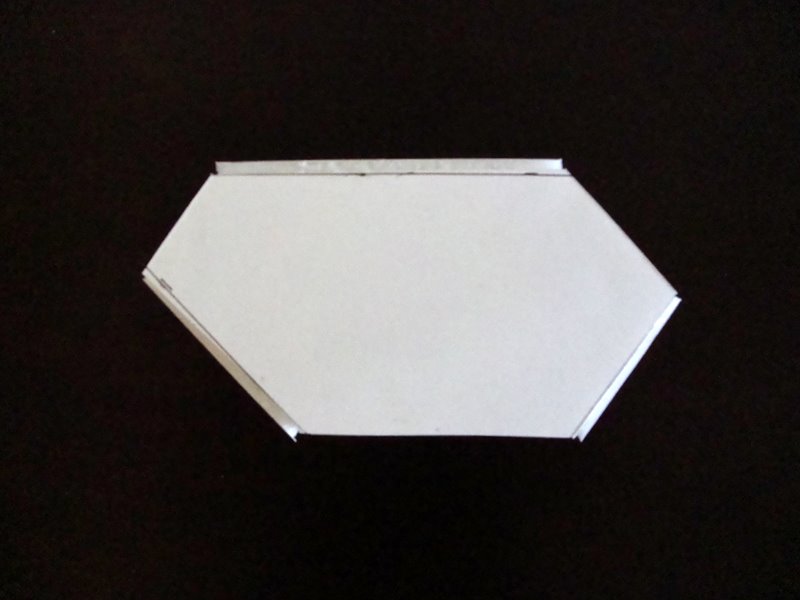
I made a few, to see what kinds of heights I could get.
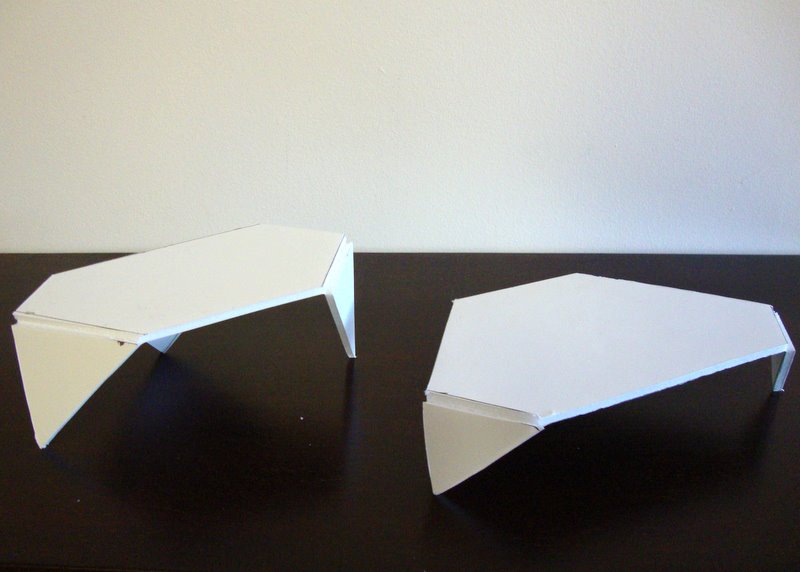
There are so many fun questions to explore here! What comes to mind?
Related Posts
Are there any numbers we regularly interact with that are less significant than this 
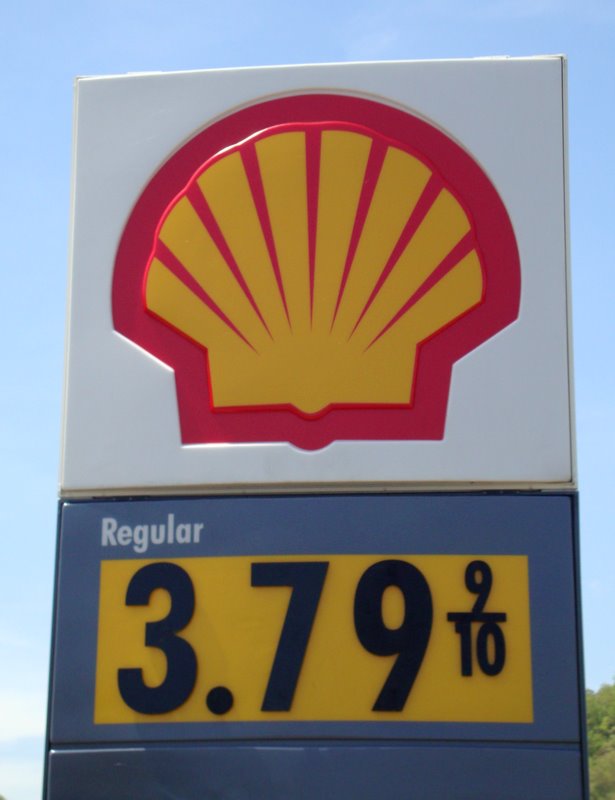
This fraction of a penny is even more pointless than these 2-decimal-place accuracy mile markers.
Related Posts
 Through Math for America, I am part of an on-going collaboration with the New York Times Learning Network. My latest contribution, a Test Yourself quiz-question, can be found here:
http://learning.blogs.nytimes.com/2011/05/4/test-yourself-math-may-4-2011/
This question is based on a recent article about the dwindling consumer support for “Green” products. Just how much does it cost us to “Go Green”?