More on Buckyballs

buckyball doodleGoogle has a nice doodle celebrating the 25th anniversary of the buckyball.  (A video of the doodle can be seen here.)

“Buckyball” is the informal name of a particular kind of carbon molecule that, geometrically, resembles the geodesic dome made popular by futurist Buckminster Fuller.  They are more generally known as fullerenes (again, after Fuller), and among other things, have recently been detected in space.

Viewed mathematically/geometrically/graph-theoretically, a fullerene is a solid consisting of only pentagonal and hexagonal faces.  There are many different fullerenes–for example, having 20, 70, or 200 vertices–but what’s amazing is that apparently all of them have exactly 12 pentagonal faces.  Only the number of hexagonal faces changes.

Apparently this fact is a direct consequence of Euler’s formula, namely V – E + F = 2, where V, E, and F are the number of vertices, edges, and faces, respectively, in a given solid.  For example, a cube has 8 vertices, 12 edges, and 6 faces; note that 8 – 12 + 6 = 2, just as Euler requires.

Try verifying Euler’s formula for an octahedron!  Then, when you’re done with that, prove the above remark about fullerenes.

Related Posts
Garden-Variety Fractals

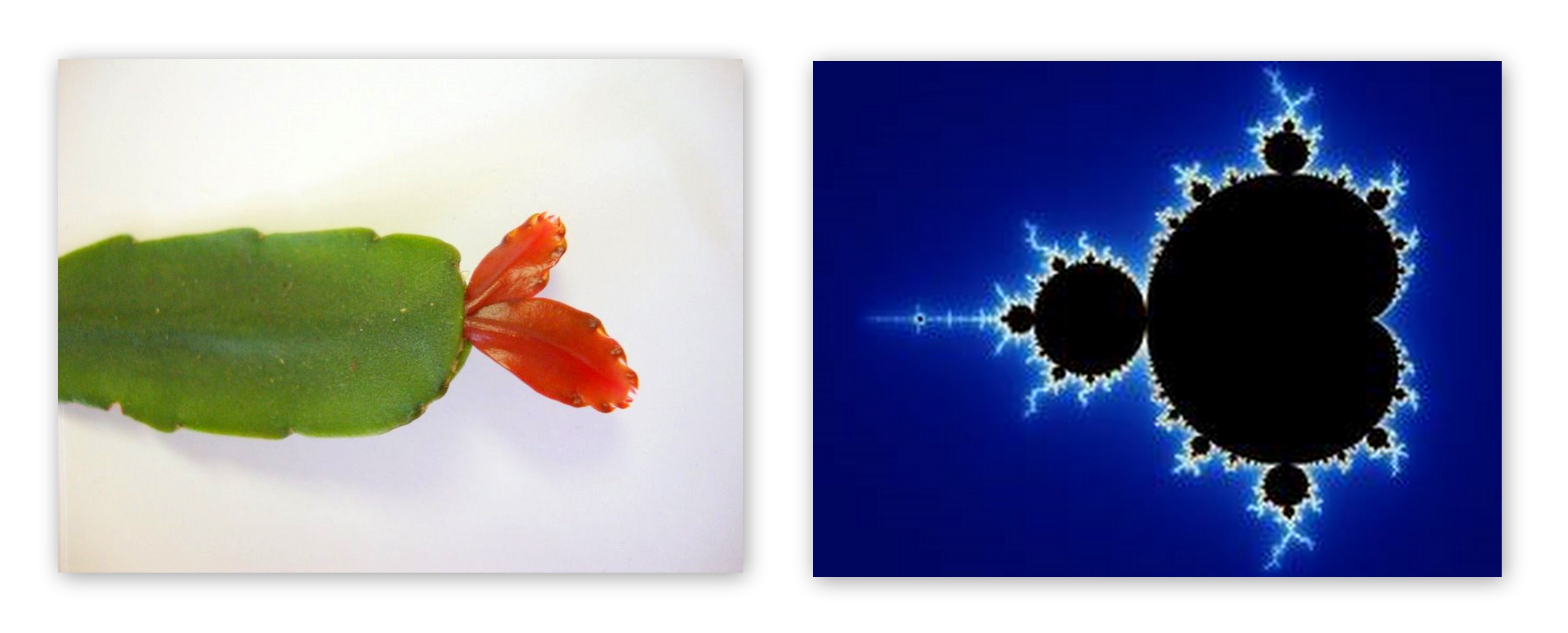
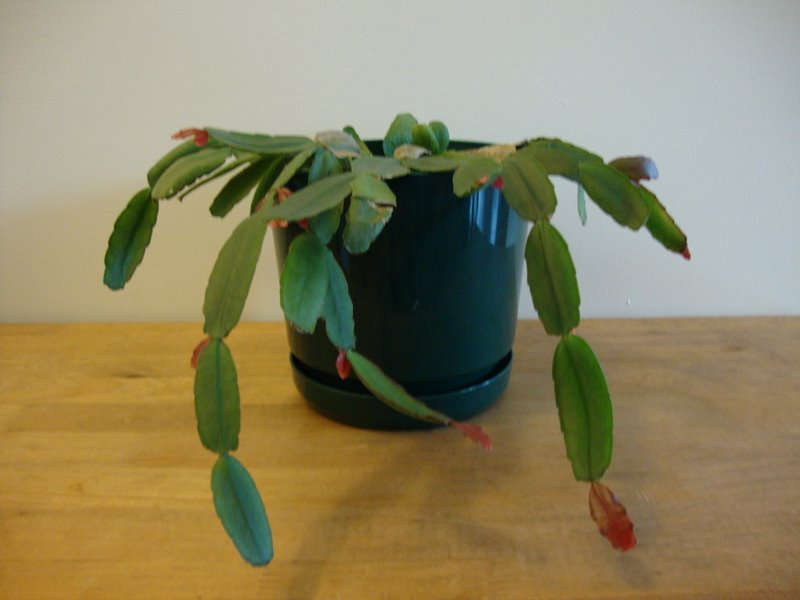
My Mom gave me some clippings of a Christmas Cactus (Chris, pictured at the right), and after taking a while to get accustomed to her new home, Chris is finally starting to grow.

Christmas Cactus

The new leaves sprouting out, smaller but similar to the original, put me in mind of the Mandelbrot set.  The bulbs that “grow” out of the Mandelbrot set are perfectly similar to the original, and no matter how much you zoom in, you’ll always see the exact same sort of object.

plants and fractal
I can’t say for sure if the leaves of the Christmas Cactus are infinitely self-similar, but it’s close enough for my eyes.

Buckyballs Detected in Space

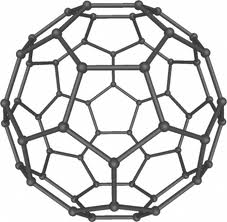
For the first time, scientists have verified the existence of “buckyballs” in space.   Buckyballs are carbon molecules made up of 60 atoms arranged in a soccer-ball like structure

buckyball


Notice the interlocking pentagons and hexagons.  There are 60 vertices in this solid, so how many of each polygon?

Buckyballs are named after Buckminster Fuller, as they resemble the geodesic dome he made famous.  Fuller was a creative, prolific man–a futurist–who was never short of whimsical ideas, like using blimps to drop bombs to make holes to plant tree-houses in.

Related Posts

Problem-Solving Under Pressure

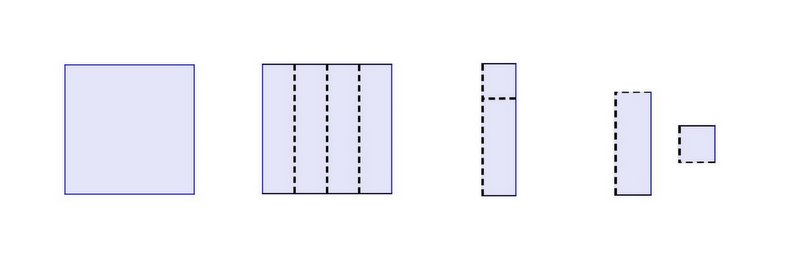
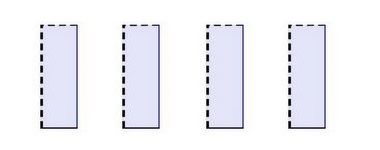
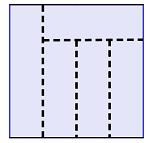
Near the end of a long morning building a small table, I encountered the following simple geometry problem:  I needed to cut four small rectangles from a square of self-adhesive rubber to serve as the feet of the table’s legs.  So I cut the square into four equal strips, lopped off the end of eachsquares 1and had my feet.four feet

All well and good, but I missed the superior solution that any decent problem solver should have seen immediately:

better solution

This solution would have left me with one long rectangular remainder, as opposed to four small square remainders.

After working on the table for a while, I was mentally and physically drained, and I think this affected my ability to see the better solution.  I guess it makes sense that being tired [and frustrated!] would negatively impact one’s ability to solve problems.

It’s interesting to think about how our physical, mental, and emotional states can affect our problem-solving abilities.  And I think this suggests that problem-solving stamina is something we might want to work on.

Related Rates on the Street

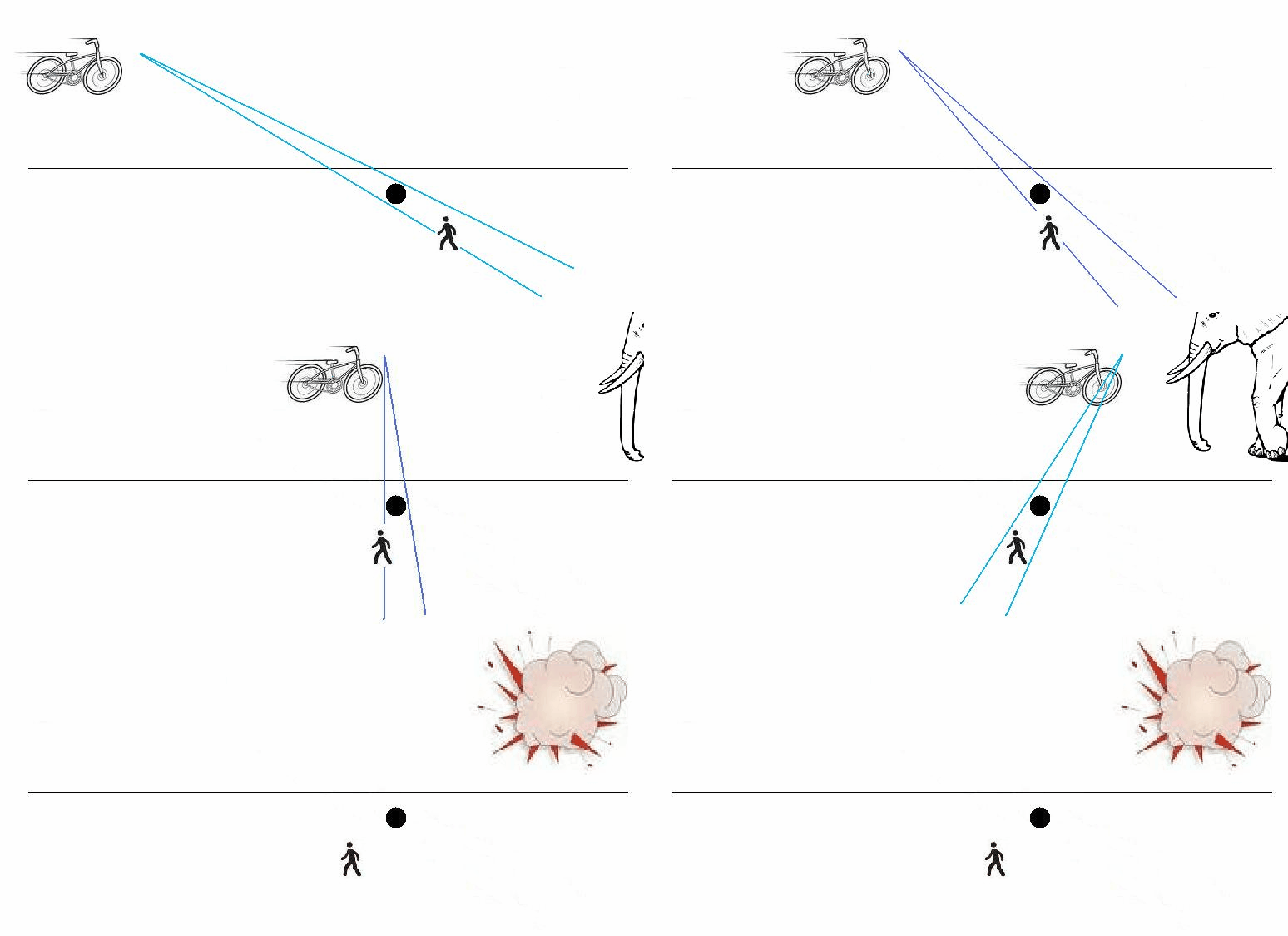
I feel like I’ve had this experience many times in my life:  I’m biking down the road, or walking along at a brisk pace, and out of the corner of my eye I catch a glimpse of a person I think I know.  As I turn back to take another look, a well-positioned telephone pole or lamp post gets in between me and the unknown.

Somehow, the geometry and physics of the situation perfectly conspire to always keep the pole between me and the mystery person.

Click on the image below for a demonstration

A thorough analysis of the problem would be interesting, taking into consideration the different initial velocities, the different positions, the radius of the pole, different paths, and the like.

Follow

Get every new post delivered to your Inbox

Join other followers: