New York Times Learning Network: Math, Money, and Midterm Predictions
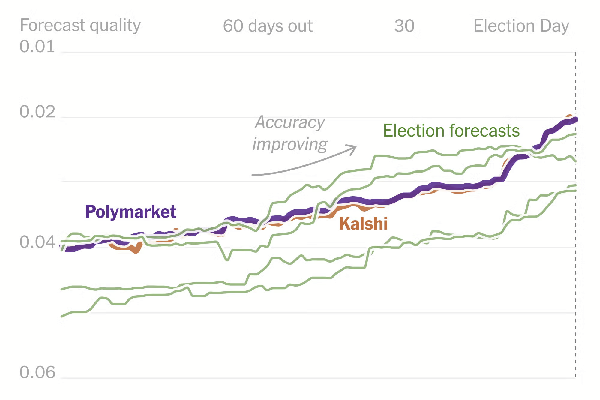
My latest contribution to the New York Times Learning Network is this 15-minute lesson on the role of prediction markets in the recent midterm elections. I certainly don’t want students betting on events in prediction markets like Polymarket and Kalshi, but I think it’s important they understand them. This is a place to start.
According to the article, Polymarket assigned Senator Darline Graham a 70 percent chance winning her election in South Carolina. What does it mean to say that someone has a 70 percent chance to win an election? How is this kind of statement different from a statement like “When a fair six-sided die is rolled, there is a roughly a 33 percent chance that a 5 or 6 will appear”?
In fact, Ms. Graham lost her election to the Democratic challenger Annie Andrews by around 90,000 votes. Given the outcome, how do we think about the prediction that she had a 70 percent chance to win? Does it mean that the prediction was incorrect? What exactly constitutes evidence for, or against, a claim like this?
This Learning Network article is freely available here and grants free access to all of the linked Times articles as well.
Related Posts
0 Comments