More Math and Vegetables

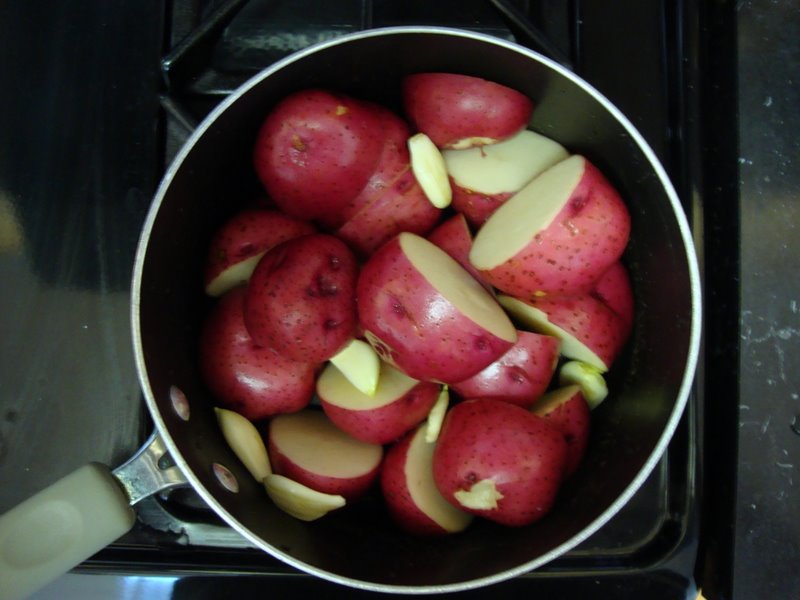
I picked the wrong pot while preparing potatoes, and found the pot a little full.

Potatoes

I had to slice up the potatoes into smaller chunks so that they could all fit in my pot.  Predictably, my poorly planned pot of potatoes prompted me to ponder the packing problem.

In a simple form, the packing problem asks “What’s the best way to pack oranges in a rectangular box?”  Should the oranges be in columns (sitting right on top of each other?), or should you try to fit oranges into the gaps created when you make an orange-square (more like a pyramid?).

The packing problem, despite its seemingly modest statement, leads to very complicated and deep ideas.  My potatoes led to a very delicious side dish. 

Ode to Equilateralism

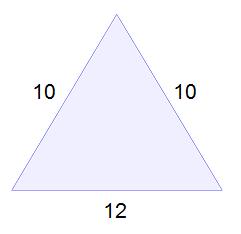
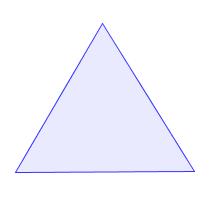
Equilateral 1Today, 10/10/10, is Equilateral Triangle Day!  This day doesn’t come around that often, so I thought I’d expound a bit on the virtues of equilateralism.

There is so much to appreciate about the equilateral triangle–its uniform shape, its simple area formula, its presence in regular hexagons, its decomposition into 30-60-90 triangles–and most of these properties are a consequence of the equilateral triangle’s abundance of symmtery.

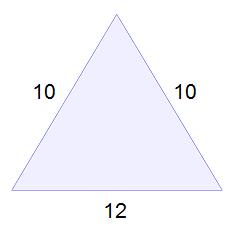
Consider this plain old non-equilateral triangle.
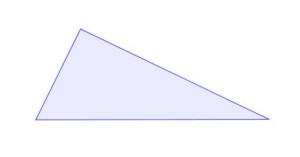
plain triangle

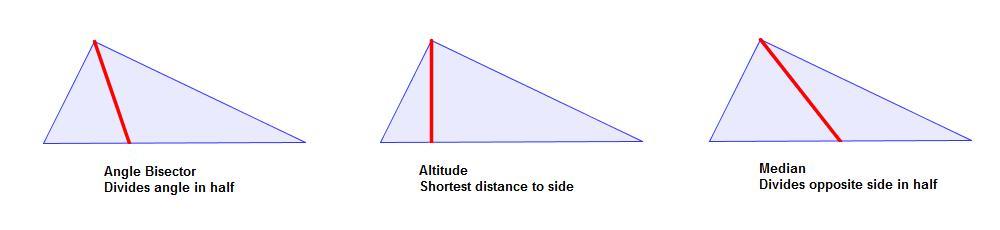
In any triangle, from any vertex there are three important segments you can draw–the angle bisector, the altitude, and the median.  Each of the segments defines a kind of symmetry for that part of the triangle.
Triangles

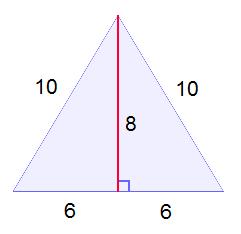
Notice how these three segments are all quite different in our plain old non-equilateral triangle.  But, if we were to make the two sides from that vertex the same length (i.e., make the triangle isosceles), all those segments become equal!
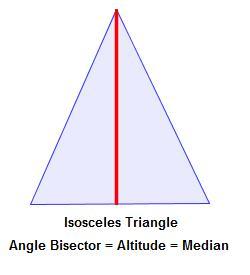
Isosceles Triangle

The sides being the same length force all those lines of symmetry to become one.  Now, the beauty of the equilateral triangle is that it’s like three isosceles triangles rolled into one! 
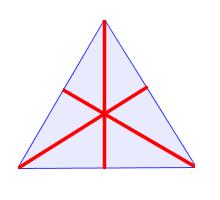
Equilateral 2

It’s an isosceles triangle from every vertex!  So, all those lines of symmetry are the same no matter how you look at it.

Enjoy the next 397 days, until the next Equilateral Triangle Day.

Related Posts
 

Look Around You — Maths

funjy's mathsThis is a thoughtful and hilarious satire of old-school, British public television-style educational videos.

http://www.youtube.com/watch?v=Pj2NOTanzWI

I laughed repeatedly throughout.  Watch the video, and give it a minute or so to win to you over.  It’s worth it.

P.S.  Students–please do not bring razor blades, Garry Gum, or Anti-Garry Gum to class in your pencil case.

Thanks to Ivan R. for showing me this! 

What’s So Special About 733?

number spiralThis is a nice resource from Erich Friedman, a math professor at Stetson University:  it’s a list of distinctive characteristics of [most of] the numbers between 1 and 9999:

http://www2.stetson.edu/~efriedma/numbers.html

Now, maybe knowing that 215 is equivalent to 555 in base 6 isn’t that useful, but there are a lot of great ideas woven throughout this list of integers.  If you can fill in any of the gaps (do you know anything distinctive about 6821?), I’m sure Dr. Friedman would love to hear from you.

I, RuBot

RuBotThis is a great video of RuBot, the Rubik’s cube solving robot!

http://www.youtube.com/watch?v=pOhU3WP7zXw

This video was shot at the Maker Faire, a sort of do-it-yourself science fair recently held in NYC.

Apparently you can scramble up the cube any way you like, and set it on RuBot’s platform.  RuBot picks it up, inspects the sides to determine the configuration, and then solves the cube!  RuBot must have been happy when it was recently announced that every position of the Rubik’s cube can be solved in 20 moves or less.

I’m not sure if Rubot can solve 4×4’s or 5×5’s cubes.  And I’m not sure why they made him look so creepy.

Follow

Get every new post delivered to your Inbox

Join other followers: