This door detail from the Quinta de Regaleira in Sintra, Portugal caught my eye.

Maybe because it put me in mind of the Mandelbrot set.

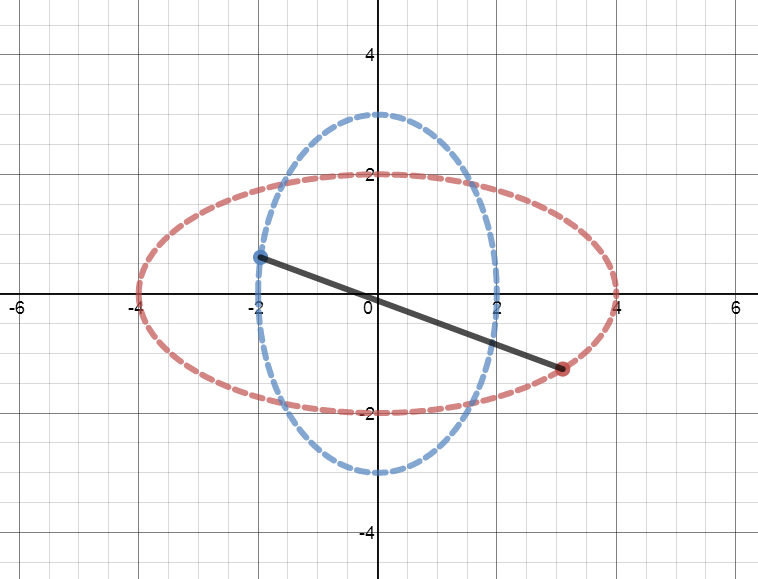 Desmos is a powerful, versatile, and free online graphing calculator.
Desmos combines the typical functionality of a graphing calculator with dynamic representation capabilities. The result is an intuitive and powerful tool for demonstrating and exploring mathematics.
Desmos is one of the best things to happen to math in years! It has quickly become an essential part of my math classroom.
Check out the software itself at Desmos.com.
And you can see some of the ways I use Desmos in and out of the classroom here, including resources from my Introduction to Desmos workshops.
As the 2011 MLB season winds down, there is a slim chance of something very unusual happening: a three-way tie for the wild card playoff birth!
https://www.espn.com/mlb/story/_/id/7005248/three-way-tie-american-league-wild-card-race-cause-logistical-nightmare
It seems highly unlikely that the Red Sox, Rays, and Angels will actually all finish in a dead-heat, but if they do, it will pose a lot of problems for playoff scheduling.
This is a fun, if complicated, math question to think about: what are the chances that after a 162-game season, three of the eleven teams ultimately vying for the wild card end up with identical records?
To investigate, the first thing I’d do is simplify the situation. I’d reduce the number of teams and the number of games, give every team a 50/50 chance to win every game, and then see what happens. After I’d explored a bit, I’d then consider complicating matters by using more teams, more games, and more realistic winning percentages.
A math challenge that any Strat-o-matic player could love!
I recently met some friends for dinner in an open-air food court underneath the New York City Highline. Much to my surprise, some arithmetic greeted us at the door.

Since beverages could not be purchased in cash, you first had to purchase beverage-vouchers which could then be exchanged for beverages. The beverage-vouchers only came in two denominations: $1 and $7.
I guess the food-court operators figured that most of their customers wouldn’t be comfortable solving stamp problems, so they were kind enough to provide some example solutions to common beverage equations.
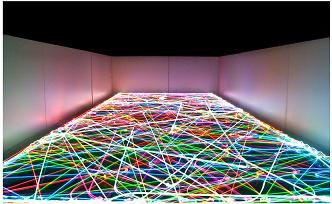 This is a great set of photos depicting art made from the paths of Roomba robotic vacuum cleaners:
The paths traced out by these self-starting sweepers could provide a novel approach to random walking. And I wonder how much of the movement algorithm can be reverse-engineered simply by looking at a collection of paths?
It might be fun to perform experiments with roombas. For example, we could try to determine how long it takes one to completely traverse a floor, or how many times on average they pass through a given point. Or if working in tandem, what is the probability that two roombas collide?
Of course, we’d have to address the ethical issues of experimenting on roombas without their consent.