P v NP and Collaborative Mathematics

thinking computerThis is a nice article in the NYT about a recently proposed solution to the famously unsolved mathematical question “Does P = NP?”

http://www.nytimes.com/2010/08/17/science/17proof.html

Essentially this question is about how long it takes to solve certain kinds of problems:  if a proposed solution to a problem can be checked in some reasonable amount of time, does that mean we can always solve the problem in a reasonable amount of time?  [Warning:  the definition of reasonable here may seem unreasonable.]

For example, it doesn’t require many operations to determine whether or not 7411 divides 748511;  even by hand, you can work it out in a few steps.  It requires significantly more operations, however, to find the prime factors of, say, 837751.  Essentially, P v NP asks “are problems that can be checked by computers (maybe lots and lots of computers working in parallel) necessarily solvable by computers?”  It is still an open question.

Another fascinating aspect of this particular open question is the role that the internet has played in bringing great mathematical minds together.  Proposed solutions can be instantly accessed and vetted by those capable of evaluating the arguments.  Such a community can work quickly and efficiently, not just to ascertain a proof’s validity, but to improve and refine it together.

Encrypting Secret Messages in Pictures

This is a very cool (and somewhat technical) description of a simple way to use Mathematica to hide a secret message in an image file.

http://blog.wolfram.com/2010/07/08/doing-spy-stuff-with-mathematica/

The basic idea is that you erase the last digit (in binary) of each pixel’s “color channel”, and then use that spot to store part of the secret message.  Given an image, you can then recover the secret message by looking at that last digit in each channel.

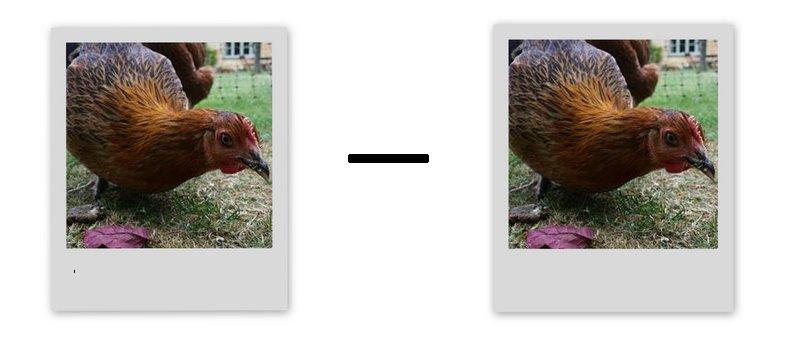
This process does change the image somewhat, but not in a way that the normal human eye (with normal viewing equipment) would ever notice.  In the post, the author subtracts the adjusted image from the original:

Chicken Difference

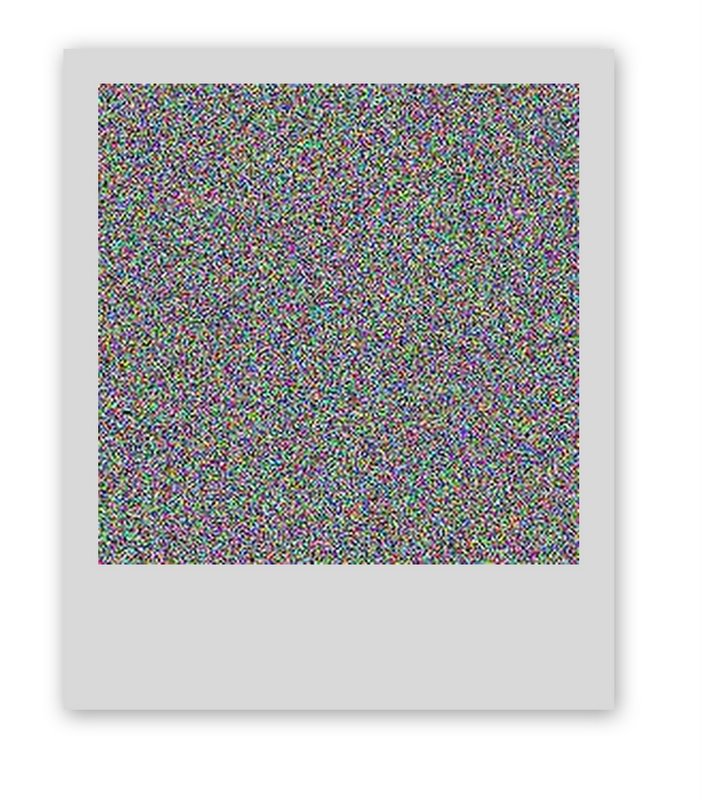
To most viewers, the difference looks like this:

Chicken Diff 1 final

Only under extreme contrast can you actually see the real difference in the two.  Here, we see the invisible ink reappear!

Chicken Diff 2 final

All that’s left is to decode the colors and read your message.  But be careful–sending and receiving secret messages might get you some unwanted attention.

Computer Modeling of Gulf Oil Dispersion

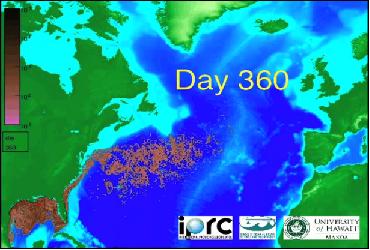
oil spill modelThis is an interesting computer simulation of the potential spread of the gulf oil disaster throughout the Caribbean and Atlantic:

http://www.youtube.com/watch?v=nAiG-TPYIFM

This reminds me of weather-prediction models:  input some initial conditions, set up the propagation rules, and then iterate, iterate, iterate.  Of course, modeling the mathematics of the initial conditions and the propagation rules is a huge challenge.

Water Ellipses?

A funny thing happened on the way to the graphing utility.

I thought I’d use Geogebra to estimate the equation of the water parabola I saw at the Detroit Airport.

So I pasted the photo into Geogebra, dropped five points on the arc, and then used “Construct Conic Through Five Points”.  The results are on the right.

Now the weird part:  the equation is not a parabola, but an ellipse.  I thought that perhaps I had done a poor job of selecting points, but no matter how I chose the points, the equation came up as an ellipse.

Note the presence of both an x² and a y² in the equation below.

Ellipse.Equation

Is this a limitation of Geogebra?  Is this an anomaly caused by rendering the digital picture?  Or is the assumption that the path of the water is parabolic faulty?

Related Posts


Follow

Get every new post delivered to your Inbox

Join other followers: