Twitter is a robust and adaptable social-networking platform that makes it easy to exchange ideas and resources with others who share your interests. Twitter has dramatically affected how I think about teaching, how I plan for teaching, and what I do when I need ideas, inspiration, or assistance.
What follows is a brief introduction to Twitter, how I use it, and why other math teachers might want to use it, too.
The philosophy that underlies Twitter is very simple. Every user on Twitter is essentially their own broadcast channel. You decide which users to listen to by following them. If you follow a user, you will see every message they publish. If you like what they say, great: you can re-broadcast their message to your followers (a re-tweet), you can start a discussion, or you can just listen.
What if you don’t like what someone has to say? Well, remember, you can always just listen. Or, perhaps you want to see what other people might say in response. In the end, if you’re not interested in what someone is broadcasting, you simply un-follow them. You’ll no longer receive their messages.
One feature that makes Twitter unique is message length: all messages must be less than 140 characters. This is a hold-over from Twitter’s beginnings as a text-message-based platform; it forces users to be concise, and it keeps conversations moving quickly.
But what really makes Twitter so powerful are the many communities that use it to share and discuss ideas. At any given time, there are millions of conversations happening between passionate and knowledgeable people on Twitter. The key is to find people who are talking about what interests you. When you find them, listen to them, and find out whom they listen to. And when you are ready, start participating.
For example, there are thousands of math teachers on Twitter from all over the world, from all different backgrounds, with different perspectives on math and teaching. Through Twitter, we share ideas, ask each other questions, brainstorm project ideas, pass great around resources, and actively discuss math and teaching in a highly positive and constructive way.
Here are just a few examples of how Twitter has affected me, as both a teacher and a professional.
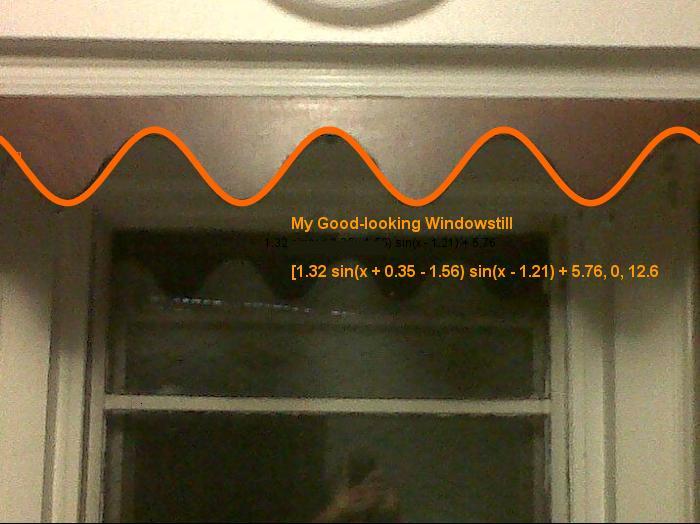
- I enjoy taking math photos and posting them here on www.MrHonner.com. A teacher 1,000 miles away saw them, shared them with his students, and now they are taking their own math photos!
- Alex Bogomolny, creator of Cut The Knot Math, frequently tweets about great math proofs, paradoxes, and puzzles. He shared a question about a curious geometric limit and asked if anyone had a different solution; I quickly became obsessed and spent a Saturday morning coming up with this trigonometric approach.
- After many Twitter-based conversations about the NY Math Regents exams, I wrote a short series on the quality of the tests. This connected me to other teachers around the city and state who read the articles and shared their thoughts with me through Twitter, email, and blogging.
To get started on Twitter, register for an account and start following some people who might interest you. For math teachers, here’s a short list of recommendations: follow these folks, see whom they follow, see who follows them, and pretty soon you’ll have your own personal learning network!
- @CutTheKnotMath — The creator of Cut-the-knot.org who frequently shares great links and great ideas.
- @TimChartier — Math professor at Davidson college interested in teaching, technology, and mime.
- @StevenStrogatz — A well-known mathematician and author at Cornell.
- @JohnDCook — Applied mathematician, statistician and consultant John Cook.
- @divbyzero — Dave Richeson, professor of mathematics at Dickinson College, and a great blogger.
- @evelynjlamb — Evelyn Lamb, a mathematician and writer for Scientific American and other sites.
- @RepublicofMath — A mathematician and math educator who is actively involved in many Twitter-based math communities.
- @DavidWees — Canadian educator focusing on math and technology. A tireless tweeter.
- @monsoon0 — Applied mathematician at the University of Sydney
- @MathBloggingEds — Editors picks from MathBlogging.org, a math-blog aggregator site.
- @mathematicsprof — Math professor sharing an endless stream of interesting ideas and links
- @maanow — Official Twitter account of the Mathematical Association of America
- @amermathsoc — Official Twitter account of the American Mathematical Society
- @MathforAmerica — Official Twtter acccount of Math for America, an outstanding professional organization devoted to recruiting, training, and retaining great math teachers.
- @MrHonner — My Twitter account. You can find everyone above, and many others, on my “Following” list.
So sign up, start following, and start listening! Before you know it, you’ll find yourself thinking, teaching, and learning a lot differently!
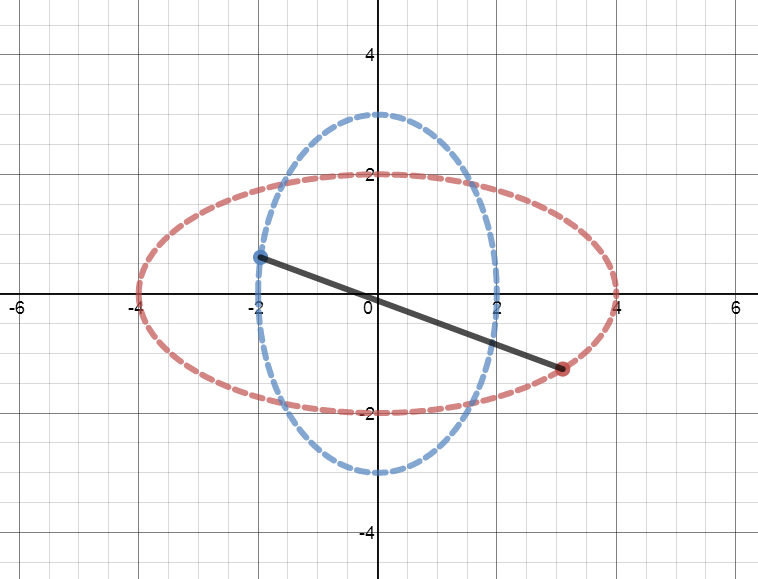 Desmos is a powerful, versatile, and free online graphing calculator.