AMS Math in the Media — Interview

I was recently interviewed for the American Mathematical Society’s Math in the Media column, in which I answer some questions my Quanta Magazine column and about writing about math for the public. I was asked specifically about my column on the universal covering problem.

Why did you recently choose to write about the universal covering problem?
It’s such a fun mathematical story to tell, with meaningful connections to high school geometry. And there’s something uniquely mathematical about studying a shape for a hundred years and still not knowing exactly what it looks like. I enjoy bringing those experiences to others.

The rest of the short interview can be found here.

The Math of Social Distancing is a Lesson in Geometry — Quanta Magazine

My latest column for Quanta Magazine connects the geometry of social distancing, a topic on everyone’s mind right now, with sphere packing, a problem mathematicians have been working on for hundreds of years.

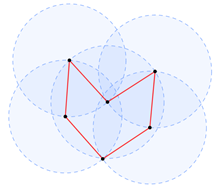
Determining how to safely reopen buildings and public spaces under social distancing is in part an exercise in geometry: If each person must keep six feet away from everyone else, then figuring out how many people can sit in a classroom or a dining room is a question about packing non-overlapping circles into floor plans.

In two dimensions, the sphere packing problem is really the circle packing problem, and the best way to pack circles in the plane is known. But it was only recently that mathematicians settled the question about how to most efficiently pack spheres in dimensions 8 and 24. And there are still many open questions in other dimensions!

You can read the entire article here.

Remote Learning — Week 14

Everything has changed, so they say. The end of the school year is usually a time of great relief and satisfaction, but there’s something anticlimactic about this transition to summer. Usually it’s accompanied by a comforting sense of resolution. Not this year.

My department spent its final days trying to talk about the fall. What if we see students every other day? What if we only see them every five days? What if we’re entirely remote at the start? Can adjusting our course sequences help? How do we approach assessment? Participation? Collaboration? In a way it’s fitting that we end with as many questions as when we started. Maybe more.

I’ve heard people say remote learning made them feel like they were first-year teachers again. I wouldn’t go quite that far, but rethinking everything from instruction to engagement to assessment definitely brought back memories of my early career, when everything I did seemed like an experiment on the brink of failure.

Navigating Emergency Remote Learning as a teacher has been an unique professional challenge. I’m thankful that I didn’t have to face it alone: I learned alongside many great teachers in New York City and across the country. And I’m lucky that my students were ready to adapt, learn, and succeed, as they always are.

And so ends fourteen weeks of reacting and adapting. I’m glad I made time for these reflections: They’ve helped these past few months, and they’ll help in the fall. But first, I’ll give the comfort of summer a few more chances to sink in.

Related Posts

Follow

Get every new post delivered to your Inbox

Join other followers: