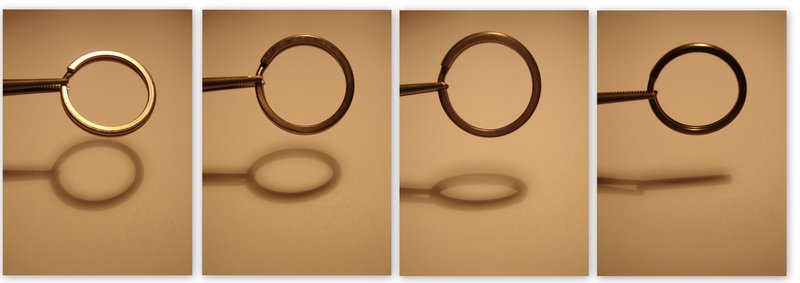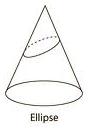
During some explorations of the one-cut challenge, a student produced this, which we all agreed was beautiful.
Find more math and art in paper at my Fun With Folding page!
During some explorations of the one-cut challenge, a student produced this, which we all agreed was beautiful.
Find more math and art in paper at my Fun With Folding page!
In honor of the Bridges Organization and its annual conference on Math and Art, I will be posting about math, art, and their many intersections for the next two weeks.
The Bridges 2011 conference, held in Coimbra, Portugal, features prominent mathematicians and artists from around the world. Fields’ Medalist William Thurston and the soon-to-be Museum of Mathematics‘ George Hart among others will be giving talks and presenting their art. A program of select participants can be seen here:
http://bridgesmathart.org/bridges-2011/2011-speakers-coordinators/
Through Math for America, I am part of an on-going collaboration with the New York Times Learning Network. My latest contribution, a Test Yourself quiz-question, can be found here:
https://learning.blogs.nytimes.com/2011/07/25/test-yourself-math-july-25-2011/
This problem was created after playing around with a great New York Times interactive infographic, “How Many Households are Like Yours?”.
Compared to most people, I have a heightened sense of math. One of the ways this manifests itself is through discomfort with mathematical inconsistency.
For example, inconsistent menu pricing drives me crazy (like on this Wendy’s Menu), and consistent menu pricing leaves me with a warm, fuzzy feeling (like on this Five Guys’ Menu). A recent example of this mathematical discomfort occurred at a studio where I often play music.
The owner of the studio is liquidating his library of VHS Tapes, which include a lot of rare concert videos. The tapes are nicely displayed in a glass case, and a sign displayed the prices:
I’m friendly with the staff, so I felt comfortable going off on a mathematical rant in front of them. I started in on their pricing structure.
“These prices don’t make sense,” I said. “If someone buys 4 tapes, the cost is $2.50 per tape; for 8 tapes, it’s still $2.50 per tape. Shouldn’t you be offering a larger discount for 8 tapes?”
I continued. “And look, if you buy 8 tapes, tapes 5, 6, 7,and 8 each cost $2.50, the same as tapes 1, 2, 3, and 4. But if you buy 12 tapes, tapes 9, 10, 11, and 12 each cost $1.25! The marginal cost of a tape should be strictly decreasing!”
The staff humored me by sharing a laugh over my mathematical discomfort, and that was the end of it. Until I returned to the studio.
As I was packing up and checking out of my session, a staffer approached me. “I thought about what you said last time; it made a lot of sense.” I responded with a quizzical look, unsure of what he was talking about. “The cost of the tapes,” he said. He pointed to the glass case. “I changed the pricing system because of you.”
I slept a little easier that night, knowing that I had struck a blow for mathematical consistency.