
And here’s another example of some geometric art on Governor’s Island.
This is a small but useful collection of classroom resources built around applications of mathematics from the Centre for Innovation in Mathematics Teaching.
http://www.cimt.plymouth.ac.uk/resources/topical/
There are lesson plans and student handouts built around topics like Carbon Footprint, Popular Baby Names, Rankings in Sports, and Physical Fitness, among many others.
There are definitely some interesting ideas and resources here, to help bring these topics into your math classroom and to your students!
Here are some examples of 3D surfaces sculpted out of floral foam by a Calculus student.


Creative and beautiful! More examples can be seen on my Facebook page.
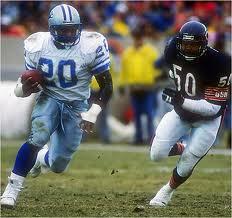 My latest contribution to the New York Times Learning Network is a Math Lesson designed around a simple Fantasy Football-style game.
In this lesson, students use data, statistics, and a novel matchup metric to evaluate players and choose their teams.
As the results come in every week, students can refine their strategies and try to make more accurate projections!
My students were recently making fun of some of the math problems on the PSAT. Apparently, one of the questions went something like this:

After having a bit of a laugh about it, we decided to try to help the PSAT exam writers make a more interesting question. Here is our revision:
 Creating this new question was far more interesting than solving the original! And thanks to Wolfram|Alpha, we can easily check the answer.