I like practicing. I’m weird that way.
When I was really into guitar, I looked forward to my daily regimen of chromatic scales. I liked playing pentatonic triplets and G major chords up and down the neck, over and over again. Sometimes I’d block off an entire day just to practice. Part of me found satisfaction in the repetition, but I also knew that every note I played was another small step toward mastery. Sore fingertips and cramped hands were what learning felt like.
But there’s a lot more to learning than drilling. I knew it back then, on my way to channeling Mississippi John Hurt, and I know it now as a teacher. This repetitive practice worked as a part of a broader approach. Yes, I needed to drill. But I also needed to experiment, explore, collaborate, theorize, and reflect. Real learning requires all of this, and more.
So as a teacher it frustrates me when drilling is proposed as the remedy to society’s mathematical struggles, a topic discussed in this recent New York Times op-ed. Yes, students should know that 7 x 8 = 56. But they should also know how to think flexibly about numbers, so when they have to multiply 71 and 83, or 7x + 1 and 8x – 4, they won’t panic when they can’t find the answer in their times table.
Students should understand multiplication, not just perform it. They should know how multiplication can sometimes be thought of as repeated addition, and why sometimes it can’t. They should be able to interpret multiplication geometrically, as area or proportion. They should recognize the algebraic structures of multiplication in other mathematical contexts, like functions and transformations.
Facility with numbers and command of basic facts are a good start, but drilling can only take you so far. The note you want isn’t always in the scale you’re working on. To play along, you’ve got to learn how to improvise. To write your own songs, you’ve got to transform those scales into something fresh and exciting. This is what doing math can feel like. And this is what we should want more of for our students. Not more drills.
We know the dangers of pushing excessive practice. Ask anyone who gave up studying an instrument why they quit and the drudgery of drilling is likely to come up. Those who end up not liking math often tell a similar story.
And this emphasis on drilling can be especially harmful when partnered with out-of-touch portrayals of math instruction. Learning for understanding is not at odds with practice and fluency. Fun does not need to come at the expense of the struggle that learning demands. Getting the balance right for every student and every class isn’t easy, but that’s why teaching math is such a complex and exciting challenge.
Perpetuating these false dichotomies can actually reinforce the obstacles we face in learning math and improving education. They convey an inaccurate picture of what math is about. And they undermine the trust between teachers, parents, and students that success requires. Like excessive drilling, this can end up doing more harm than good.
This essay was also published on the NSTA’s blog as part of my work as an NSTA / NCTM National STEM Teacher Ambassador.
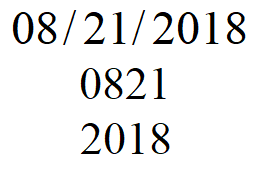
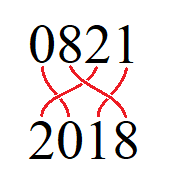
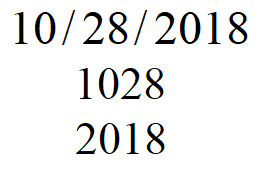 We can also consider today a Transposition Day, as we need only a single transposition (an exchange of two numbers) to turn the year into the day and date.