How Do You Study Extinction? Commit Ecocide

E.O. WilsonI watched “Lord of the Ants” on PBS the other night, a documentary about biologist E.O. Wilson.  Wilson possesses the characteristics of the great natural scientist:  a never-ending fascination with the world, the persistence to keep asking questions and to keep looking for answers, and the discipline to focus on and master a specific domain.  Wilson’s impact has been both deep and broad, and he’s even been at the center of a scientific-political-cultural controversy–another benchmark of greatness.

“Lord of the Ants” tells the story of his scientific life–past, present, and future–and it is viewable here.  In Wilson’s story, a couple of cool math-y things caught my attention.

Wilson and Daniel Simberloff, a mathematician-turned-biologist, were interested in studying how ecosystems re-populate after extinction, so they fumigated a small island in the Florida Keys and watched what happened.

In particular, they wanted to know how re-population depends on the area of the region, and its distance from the “mainland”.   Furthermore, they wanted to see if the same number of different species would return, if the same, or different, species would return, and if the relative populations of the various species would return to pre-extermination levels.

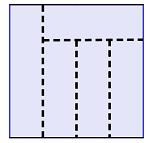
Later, Wilson goes on to describe an “Iron Law of Ecology”, namely that a 10-fold increase in habitat doubles the number of species that can be supported there.  This quantitative analysis is obviously very useful for naturalists arguing in favor of preserving more and more natural habitat.

Who Tests the Testers?

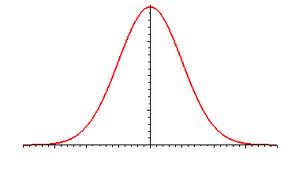
bell curveIt’s tricky business, curving state exams.

An audit by Harvard researchers compared student results on NY State exams (Regents, et al) with corresponding national exams, and it seems that much of the “progress” made by NY students over the past few years was probably illusory.

There are several telling statistics in the report, but none clearer than this:  in 2007, the minimum score on the NY state math exam corresponded to the 36th percentile nationwide.  In 2009, the minimum score on the NY state math exam corresponded to the 19th percentile nationwide.  This effectively defined proficiency as “do better than 19 percent of students across the country”.

In theory, curves for tests can drop if exams get harder, but no one with any knowledge of NY State math exams would make that argument.  Indeed, these exams have been getting easier and easier to pass.  For example, to pass the Integrated Algebra Regents Exam in 2009, a student only needed 30 raw points out of 88.  A passing score of 34% seems pretty low to begin with, but keep in mind that a student guessing randomly on the multiple choice questions alone should get about 1/4 of the questions right, which amounts to 15 points.  Halfway to proficiency.

Encrypting Secret Messages in Pictures

This is a very cool (and somewhat technical) description of a simple way to use Mathematica to hide a secret message in an image file.

http://blog.wolfram.com/2010/07/08/doing-spy-stuff-with-mathematica/

The basic idea is that you erase the last digit (in binary) of each pixel’s “color channel”, and then use that spot to store part of the secret message.  Given an image, you can then recover the secret message by looking at that last digit in each channel.

This process does change the image somewhat, but not in a way that the normal human eye (with normal viewing equipment) would ever notice.  In the post, the author subtracts the adjusted image from the original:

Chicken Difference

To most viewers, the difference looks like this:

Chicken Diff 1 final

Only under extreme contrast can you actually see the real difference in the two.  Here, we see the invisible ink reappear!

Chicken Diff 2 final

All that’s left is to decode the colors and read your message.  But be careful–sending and receiving secret messages might get you some unwanted attention.

Maybe Monkeys Can’t Do Algebra

giuseppe monkeyThere is a controversy brewing around Harvard scientist Marc Hauser, his research students, and his published results.  Some of Hauser’s work–which apparently focuses on the cognitive ability of non-human primates–has come under scrutiny, and one of his articles has been retracted.

According to the abstract, the retracted article (“Rule-Learning By Cotton Top Tamarins“) discussed how tests usually performed on human infants were used to “assess whether cotton-top tamarin monkeys can extract abstract algebraic rules”.  Obviously the results of the study are now in question, but it’s a fascinating idea nonetheless.

Game Theory and Rock-Paper-Scissors

This is an amusing infographic about some “strategies” for the game Rock-Paper-Scissors.

http://flowingdata.com/2010/07/30/how-to-win-rock-paper-scissors-every-time/

Although this graphic is a bit facetious, the author points out that there can be some real psychology behind playing the game.

I always thought it would be fun to build a simple computer simulation of the game, program different “players” with different strategies, and then run a bunch of tournaments and see what happens.

rockscissors


Follow

Get every new post delivered to your Inbox

Join other followers: