Related Posts
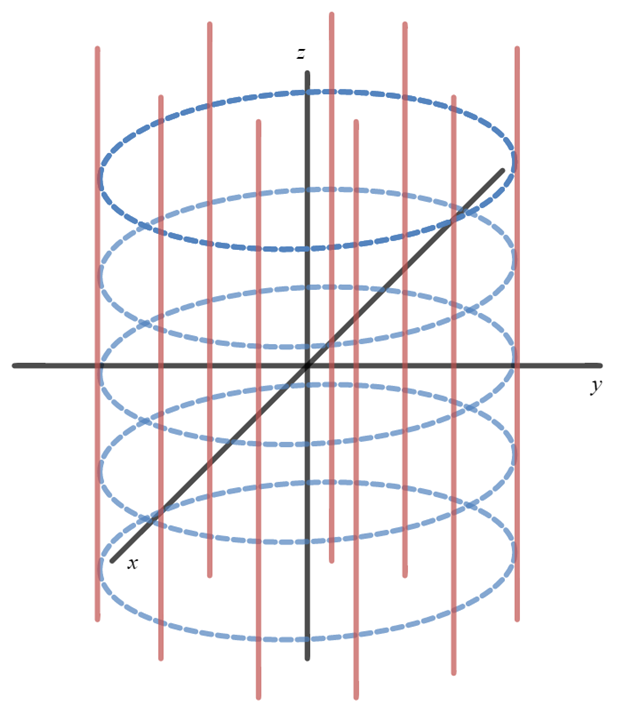 I’m looking forward to a a workshop I’ll be running tonight at the Math for America offices on three-dimensional coordinate geometry.
This workshop will cover the basic algebraic and geometric techniques for analyzing functions and relations in x, y, and z, as well as some simple methods for building interesting surfaces in space.
Sketching in space is a favorite topic of mine, and I’m really excited to share it with a group of MfA teachers. Three-dimensional coordinate geometry is an accessible, fun, and rich area that few math teachers have experience with. But given the advances in graphing technology and the applications to 3D printing, it’s something that more people can, and should, learn about!
Today we celebrate another Permutation Day! I call days like today permutation days because the digits of the day and month can be rearranged to form the year.
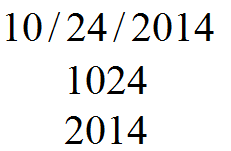
This is the fourth permutation day of of 2014, and there’s one more on its way.
Celebrate Permutation Day by mixing things up! Try doing things in a different order today. Just remember, for some operations, order definitely matters!
Every so often, some variant of the question “Is Algebra Necessary?” comes to the fore in our national conversation on math education.
As I’ve written before, conversations like this don’t bother me. I love math and I love teaching math, but I think the underlying questions here, “How much math, and what math, should everyone be required to know?”, are legitimate and worthy of serious consideration. The mere fact that it keeps coming up suggests we don’t have great answers to these questions, or even great explanations as to why things are the way they are.
So I’m always interested in pieces like NPR’s “Who Needs Algebra?”, which describes how colleges around the country are trying to address the problems created by algebra requirements. According to NPR, nearly 50% of community college students fail to graduate because they can not pass a required algebra course. For this reason, algebra is often called a gatekeeper course, as it prevents access to the credential of a college degree.
As the piece notes, colleges are doing some interesting and innovative things to try to get students around the algebra requirement. One particular approach, developed by the Community College Pathways initiative, offers statistics and quantitative reasoning courses that “largely skip over abstract algebraic formulas and go directly to math concepts that students will use and find engaging”. The piece speaks positively about this new approach, which I think has merit and deserves attention.
But I can’t help but wonder how this fits in with the Common Core standards initiative. The Common Core state math standards mandate a substantial amount of algebra in junior high and high school. In many cases, this is the same algebra that colleges are attempting to circumvent in order to increase graduation rates. How can mandatory algebra in high school be reconciled with optional algebra in college?
I think about Common Core, too, when I read about the great work Cornell professor Steven Strogatz is doing in “teaching math to people who think they hate it“. Strogatz, both a renowned mathematician and teacher, is implementing a curriculum based on Westfield State University’s Discovering the Art of Mathematics, and is finding great success reaching math-averse liberal arts students with its activity- and inquiry-based approach. But can this type of course, that excites and engages students in authentic mathematics while eschewing the typical trappings of a traditional algebra curriculum, be reconciled with the mandatory algebra standards set forth in the Common Core? [Strogatz shared some of his informed opinions about math education in his Math Horizons interview last year.]
I don’t believe these various positions are completely incompatible, but I do see a fundamental conflict here. After all, if a reasonable argument can be made that “Not everyone needs algebra”, then mandating algebra for everyone seems likely to create as many problems as it attempts to solve.
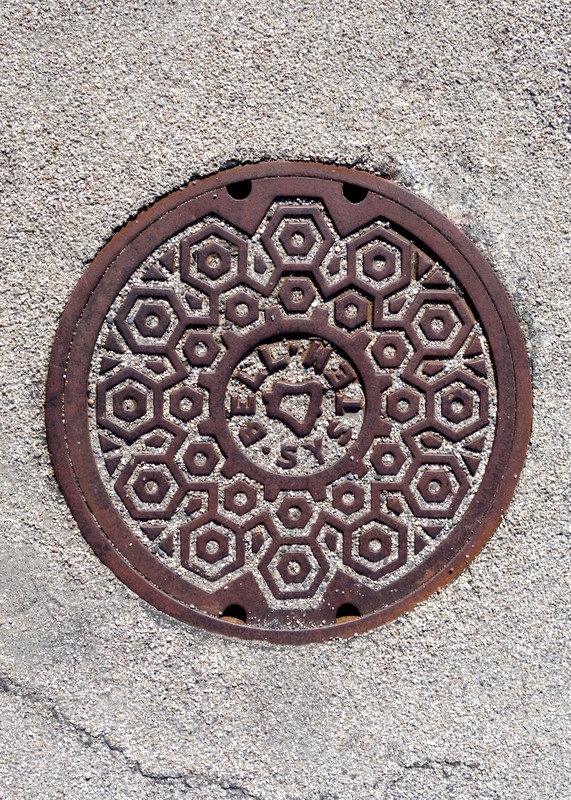
Ever since I noticed this pothole pentagon, I’ve been looking down a lot more.
The lovely mathematical designs on this this manhole cover immediately put me in mind of the labyrinths of Robert Bosch. And then later I realized this work resembled another piece from a Bridges artist: Tim Locke’s Starburst.