Fun with SumBlox

We have been having fun with our SumBlox, which recently arrived.  The number blocks are cleverly designed so that the height of each is proportional to its value.

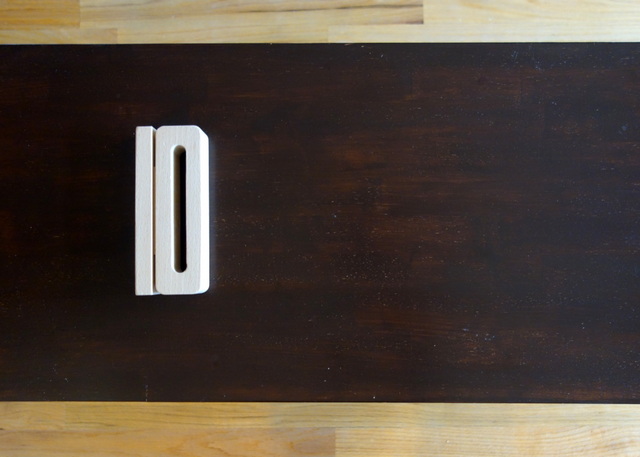
Here we have the ten block

sumblox 10

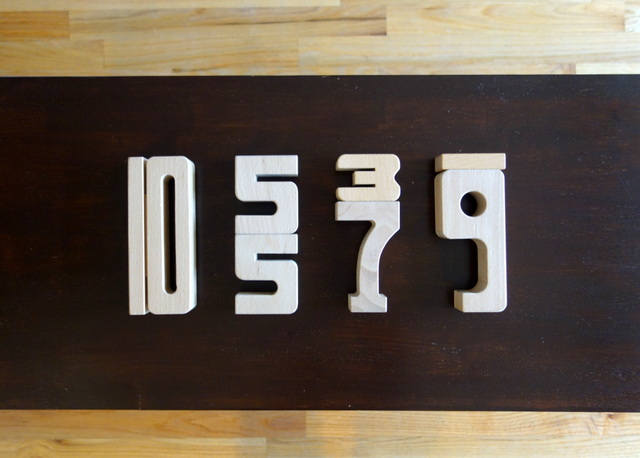
and here we have multiple mathematical ways to achieve the same height as the ten block:  five + five, three + seven, and nine + one.

sumblox sums

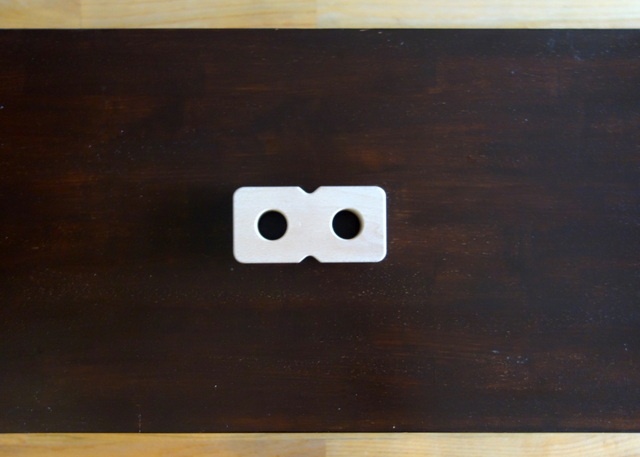
So far, playing with SumBlox seems like a fun way to build number sense and explore basic properties of addition like equivalence and commutativity.  But there does seem to be one problem:  I think they got the height of this block wrong!

sumblox infinity

Rosenthal Prize Application Workshop

I recently participated in a workshop hosted by the Museum of Mathematics about the Rosenthal Prize for Innovation in Math Teaching.  The Rosenthal Prize invites classroom teachers to submit outstanding, fun, creative, and engaging math lessons:  the author of the best lesson receives $25,000, and other noteworthy submissions are honored as well.

The purpose of the workshop was to help prospective applicants understand the submission, revision, and judging process for the prize.  The workshop panel included the directors of the museum, past judges, and three former winners of the Rosenthal Prize (including myself).

The video is embedded below, or you can watch on YouTube here.

Please spread the word about the Rosenthal Prize:  it’s rare to have such incentive to build and share creative, engaging mathematics lessons!

Sum of Angles in Star Polygons

Futility Closet recently posted a nice puzzle about the sum of the angles in the “points” of a star polygon.
http://commons.wikimedia.org/wiki/File:Pentagram.svg

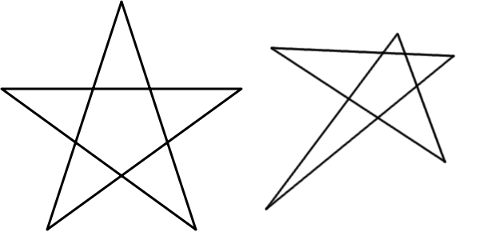
It’s easy to show that the five acute angles in the points of a regular star, like the one at left, total 180°.

Can you show that the sum of these angles in an irregular star, like the one at right, is also 180°?  (link)

A clever proof is shown, but what I would consider the standard proof is clever, simple, and beautifully generalizable.

Consider the star pentagon below.
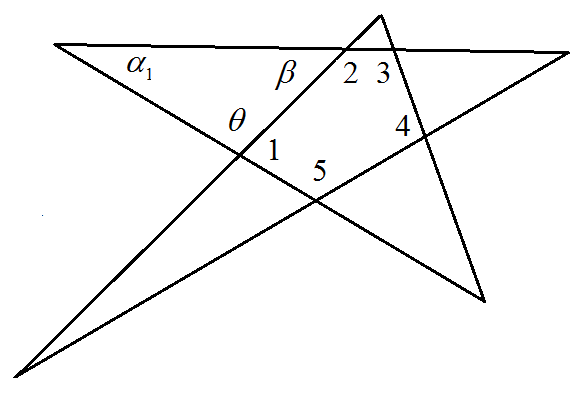
star polygonBy the exterior angle theorem, we have

\angle 1 = \alpha_1 + \beta

\angle 2 = \alpha_1 + \theta

 So

\angle 1 + \angle 2 = \alpha_1 + \alpha_1 + \beta + \theta = \alpha_1 + 180 \textdegree

where the last equality follows from the triangle angle sum formula.

Do this for each of the five “points” and sum the equations

2( \angle 1 + \angle 2 + \angle 3 + \angle 4 + \angle 5) = \sum \alpha_i + 5 \times 180 \textdegree

Now, the sum of the interior angles of any pentagon, regular or not, is 540 \textdegree, so this becomes

2 \times 540 \textdegree = \sum \alpha_i + 5 \times 180 \textdegree

And so, a little arithmetic gives us

\sum \alpha_i = 180 \textdegree

For stars of this type, where the points are formed by intersecting two sides of an n-gon that are separated by exactly one side, this method generalizes beautifully.  The above equation becomes

2 \times (n-2) \times 180 \textdegree = \sum \alpha_i + n \times 180 \textdegree

which simplifies to

\sum \alpha_i = (n-4) \times 180 \textdegree

In particular, we see that when = 5, we have that \sum \alpha_i = 180 \textdegree.  And one of the best things about having a formula like this is asking questions like “What happens when n = 4?” and “What happens when = 3?”!

Now, there are other types of star polygons.  For example, if you start with an octagon, extend the sides, and consider the intersections of two sides that themselves are separated by exactly two sides of the octagon, you get something that looks like this.
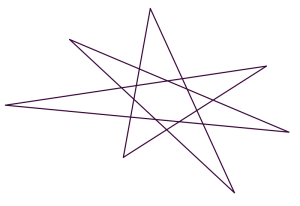
8-3 star polygon

While the formula above doesn’t apply to this star, a similar technique does.  The big difference is that, instead of the star’s points being attached an an n-gon (a pentagon, in the first example), this star’s points are attached to another star polygon!  There are lots of fun directions to go with this exploration.
3D Printing a Cube Frame

I’ve been having a lot of fun exploring mathematics through 3D printing.

Recently, I had the idea to 3D-print a “cube frame”, that is, the edges of a cube.  My first mathematical task was to figure out an equation whose graph was such a cube frame.

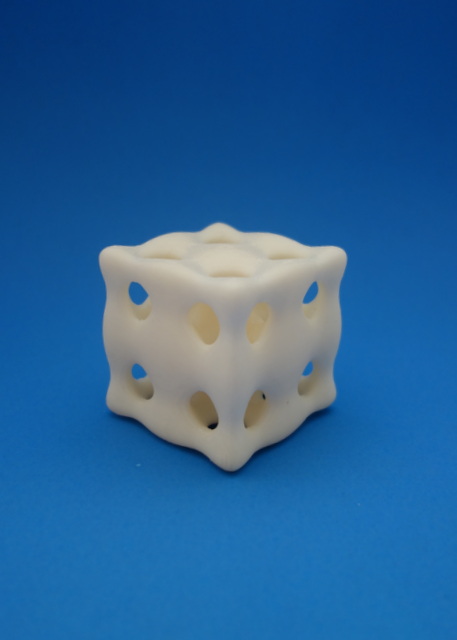
It took a little work, but I ended up with this.cube frame graphI exported the graph into the appropriate file format and successfully printed my cube frame!

Cube Frame

Just as fun as the mathematical challenges of producing the graph are the engineering challenges, and mysteries, of the 3D printing process itself.  For example, notice the scaffolding that the software automatically adds in order to print the top square of the cube.

Cube Fram -- Supports

There are some interesting mathematical and structural consequences of the scaffold-building algorithm, but even more amazing was that one “face” of the cube contained no scaffolding at all.  This meant the 3D printer printed one edge of the top square into thin air!  And it succeeded!

I’m excited and inspired by 3D printing, and I’m looking forward to finding more ways to integrate into our math classrooms.


Follow

Get every new post delivered to your Inbox

Join other followers: