Here are the most popular Math Photos from MrHonner.com for 2013. Click here to see more.
![]() |
![]() |
![]() |
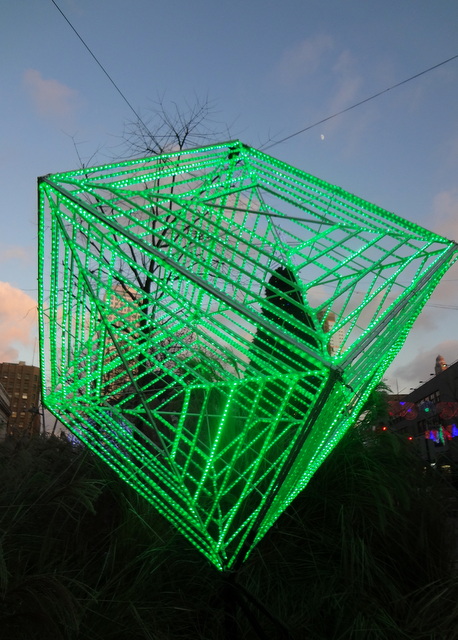
| Urban Buckyball | Radial Normals | Dangling Isosceles |
![]() |
![]() |
![]() |
| Warning Sine | Sums of Squares and Rectangles | Carpet Tiling |
Here are the most popular Math Photos from MrHonner.com for 2013. Click here to see more.
![]() |
![]() |
![]() |
| Urban Buckyball | Radial Normals | Dangling Isosceles |
![]() |
![]() |
![]() |
| Warning Sine | Sums of Squares and Rectangles | Carpet Tiling |
Through Math for America, I am part of an ongoing collaboration with the New York Times Learning Network. My latest contribution, a Test Yourself quiz-question, can be found here
Test Yourself Math — December 11th, 2013
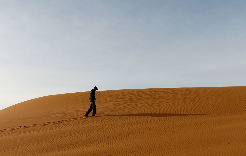
This question is about journalist Paul Salopek’s mission to walk around the world in 7 years. Approximately how many steps will he take?
My latest piece for the New York Times Learning Network is a lesson about currency based on Bitcoin, the digital commodity that has captured the interest of speculators, bankers, and regulators worldwide.
The rise of Bitcoin creates an interesting opportunity to explore the fundamental properties of currency. Where does currency get its value? Why and when are currencies accepted in exchange for goods and services? Who guarantees the security and stability of a currency?
On top of the basic questions of currency, the mining of Bitcoins (the curious and complicated process for creating new money) is rooted in mathematics and raises its own interesting questions
Most currencies have the property that new money can simply be printed, but where do the new bitcoins come from? They are “mined,” which has become a competitive business opportunity for participants. Paul Krugman describes this process of mining as “a drastic retrogression” that is as fundamentally foolish as relying on gold and silver was a century ago.
You can find the entire lesson here.
This October I had the great pleasure of meeting Fields medalist Cedric Villani. Professor Villani gave an illuminating and accessible talk about his innovative work in the study of curvature, and afterwards spent some time hanging out and chatting with a few of the attendees.
Villani is a charismatic and engaging speaker, and he provided a lot of to think about in his talk. One remark that particularly struck me was
“Mathematics, in some sense, will always involve a little pain.”
The idea resonated with me but I was curious what he meant, so I asked him about it. I was a bit surprised when he said that mathematics is unnatural, and unnatural things are always painful.
I pressed him a bit, as I didn’t quite understand. “What are the first things you learn in physics?” he asked. He was alluding to Newton’s Laws, and in particular the law of inertia: An object at rest tends to stay at rest, and an object in motion tends to stay in motion. Villani grabbed a fork from across the table, slammed it down in front of him, and gave it a push. The fork slid a short distance and stopped. “This is absurd!” he said. “It does not stay in motion!”
Physics, that is, the laws of physics, are abstractions of our experiences with the real world. Understanding that when you push something, it will stop, is natural for us; understanding the law of inertia is not. This law is an abstraction of our natural experiences, and as such, is unnatural. He went on to argue that mathematics, too, is a collection of abstractions from our experiences of the real world, and therefore is unnatural.
He made an analogy with speaking and reading: speaking is natural for humans, we are hard-wired for it. But writing is not. It does not come naturally to us. As an abstraction of speaking, writing will always be difficult for humans to learn. It will always involve a little pain. Like mathematics.
Some world-class mathematics, a little philosophy, and a mathematical autograph! All in all, a pretty good evening.