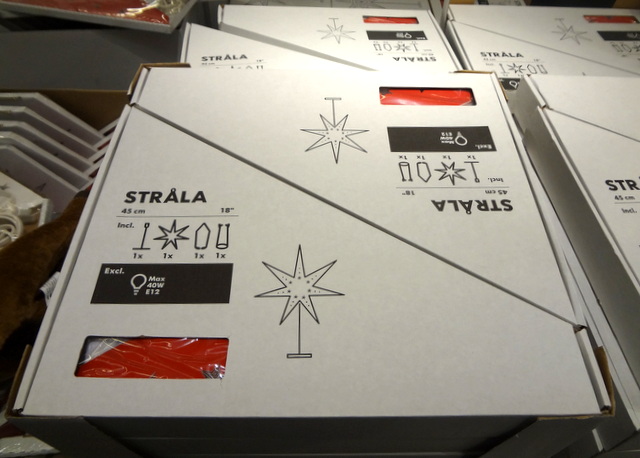
I find interesting applications of mathematics every time I visit IKEA.
Related Posts
I find interesting applications of mathematics every time I visit IKEA.
Related Posts
I wasn’t planning on attending the math education debate hosted by the Museum of Mathematics. I have read, and written, enough about Andrew Hacker and his arguments for ending compulsory mathematics education that I didn’t feel it necessary. But in the end, I decided to go. After all, there’s something inspiring about hundreds of people attending a public debate about mathematics!
As Andrew Hacker laid out his position, he shared his one visual aid with the audience:
 Photo Credit: MoMath (link)
He said his argument boiled down to one question: “Why?” As in, “Why does every student in the country, regardless of interest, ambition, or ability, have to take a full sequence of advanced mathematics in school?” It’s not an unreasonable question.
But for me, the real “Why?” question is this: “Why are we listening to Andrew Hacker?” And this question inspired my essay, “When it Comes to Math Teaching, Let’s Listen to Math Teachers“, which I wrote for Math for America’s Teacher Voices blog. Here’s an excerpt:
Andrew Hacker isn’t an expert on mathematics. And he isn’t an expert on math teaching, either. He has every right to voice his complaints, some of which are worthy of consideration, but why has he been given such an enormous platform – high profile Op-Eds, interviews, lectures, a book deal – to address the public about how to “fix” math education?
The fact that Andrew Hacker has such an outsized and undeserved role in steering this conversation is itself one of our problems: we aren’t listening to the right people. If we are really interested in identifying and addressing the problems facing math education today, we should be listening to math teachers.
You can read the entire essay here.
I also live-tweeted the event, along with a few other attendees, using the hashtag #MoMathEdTalk. You can find the tweets here; several interesting conversations ensued.
And for more of my writing on Andrew Hacker, you can start here.
Related Posts
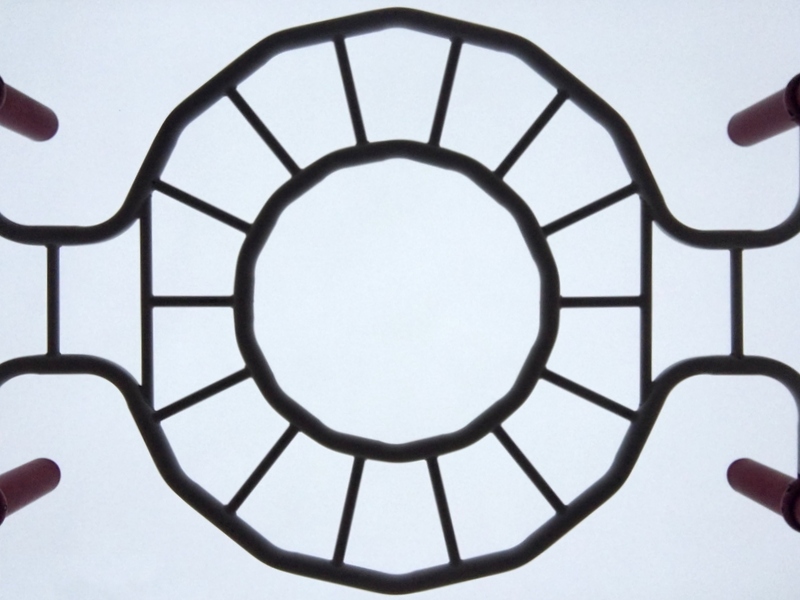
Playgrounds offer a seemingly endless supply of interesting mathematical apparatuses. I was rewarded on this particular day, seeing a regular tetradecagon for the first time ever.
Math Photo: Tetradecgaon © 2016 by Patrick Honner is licensed under CC BY-NC 4.0 

The impact of technology on education is often overstated. However, some applications of technology are unequivocally transformative in mathematics teaching.
The question “How many circles pass through two given points?” is a wonderful prompt for a geometry class. It’s simple, it provokes debate, it can be explored in a variety of ways, and it connects to many important geometric concepts. And in the end, it requires some imagination on the part of the student to truly comprehend the answer.
And after all that classroom work, it is so powerful and satisfying to see something like this.
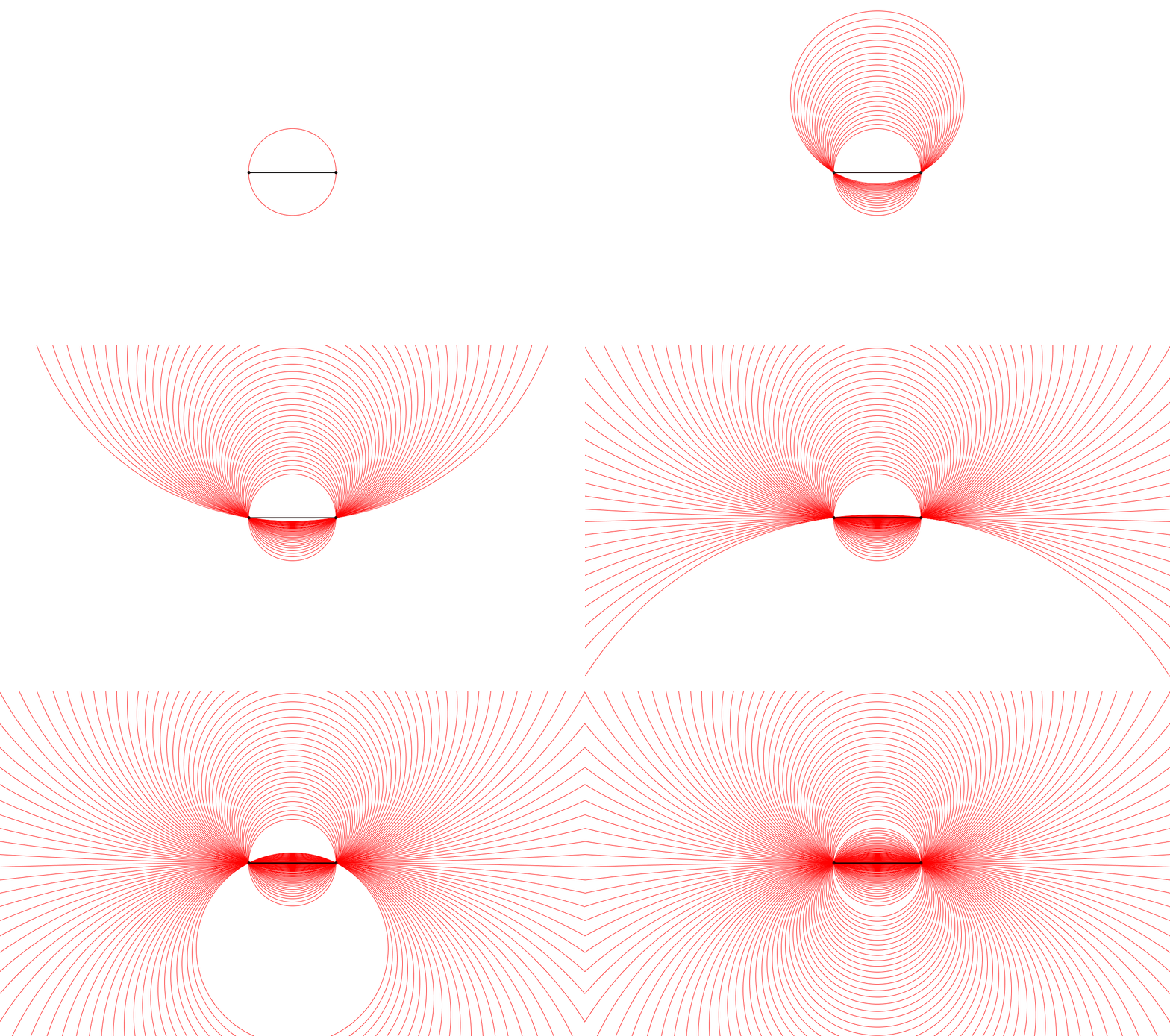
A simple demonstration that elegantly captures the essence of the problem, and leads to new compelling questions. That shows students that mathematics is beautiful and inspiring. And that takes just a few moments to put together in Geogebra.
And what’s truly transformative is how easy it is to get students using technology to create their own mathematics like this! This is the real promise of technology.
Related Posts
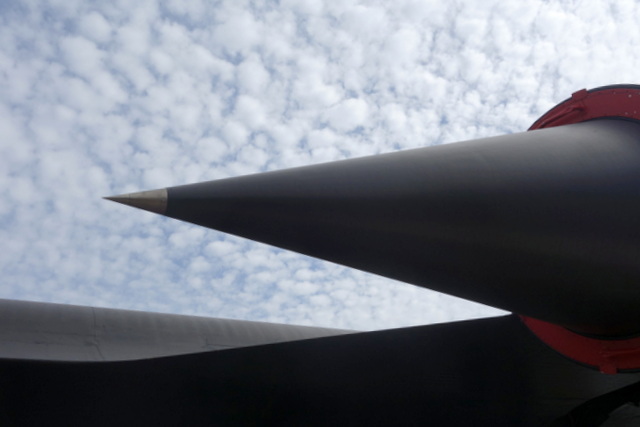
This cone sits in front of the engine of the SR 71 Blackbird, a retired long-range reconnaissance aircraft. Apparently this “spike” retracts into the plane at high speeds, to favorably alter the plane’s aerodynamic properties.